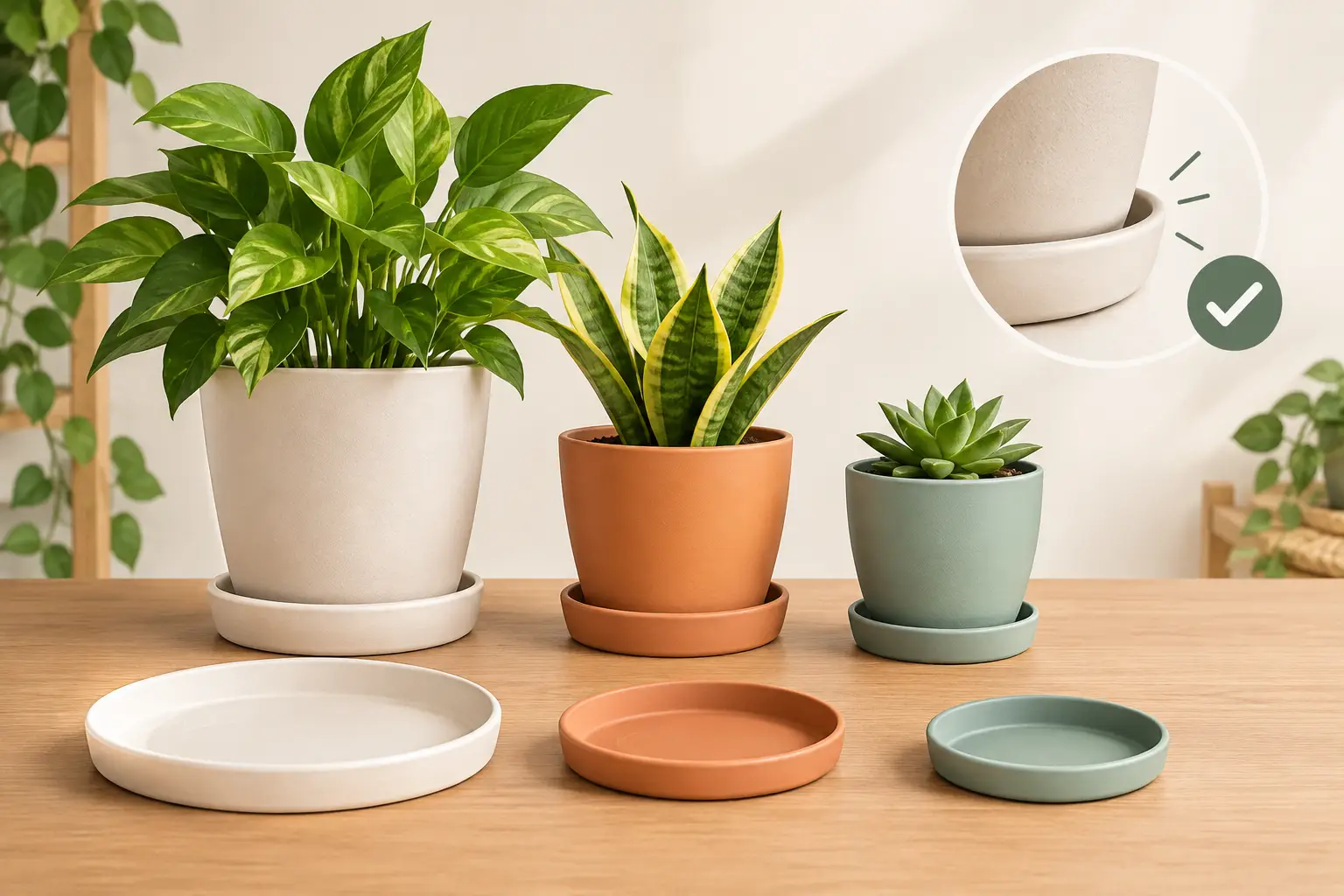
A lovely planter can lose a little of its magic when a damp ring appears on the windowsill beneath it. Learning how to choose plant saucers is less about finding a plain plastic disk and more about pairing practical plant care with a piece that belongs in your home. The right saucer catches overflow, protects furniture, gives your pot a finished look, and can make even a small plant shelf feel thoughtfully gathered.
For bonsai, houseplants, and hand-finished ceramic planters, there is no one-size-fits-all answer. A sunny pothos in a lightweight nursery pot has different needs than a shallow bonsai pot resting on a favorite wooden table. Size, depth, material, drainage habits, and the place where the plant lives all deserve a moment of consideration.
How to Choose Plant Saucers by Size
The first rule is simple: measure the bottom of the planter, not the rim. Pots often flare outward at the top, especially decorative ceramic pieces, so the opening can be much wider than the foot that actually sits in the saucer. Measure the widest point of the pot’s base, then choose a saucer with an inside diameter at least 1 inch larger.
That little bit of breathing room matters. A saucer that is exactly the same size as the pot can pinch the base, tilt the planter, or fail to catch water that runs down the outer wall. For a pot with an especially rounded bottom, an extra inch or two is often kinder and more stable.
Depth is the second half of the fit. A shallow saucer works well beneath a plant that is watered carefully and has a small drainage hole. Choose a deeper saucer for thirsty plants, larger containers, or any pot that tends to release a quick rush of water after soaking. A deeper dish gives you more margin for error, although it should not become a permanent puddle.
For bonsai, proportion is part of the pleasure. The saucer should frame the pot without visually swallowing it. A low, broad ceramic tray can make a small tree feel grounded, much like a quiet patch of earth beneath a tiny landscape. Check that the tray leaves enough room around the pot while still looking intentional on the bench, shelf, or table.
A quick measuring habit
Place the empty pot on a piece of paper and trace around its base if measuring a curved foot feels awkward. The saucer’s inside measurement must be larger than that tracing. Product dimensions can describe the overall width from outer edge to outer edge, so looking for the usable interior space prevents a frustrating surprise when your new piece arrives.
Pick a Material That Matches the Setting
Plant saucers come in plastic, glazed ceramic, terracotta, metal, glass, and more. Each has a role, and the best choice depends on where your plant sits and how you like to care for it.
Plastic is lightweight, inexpensive, and easy to move. It is useful under large floor plants where a heavy saucer would make lifting difficult. Clear plastic is also wonderfully discreet if you want the planter itself to be the star. Its trade-off is personality: it can look more utilitarian than decorative, especially on an open shelf or dining table.
Glazed ceramic saucers bring color, weight, and a handmade presence. A glossy glaze creates a nonporous surface that is easy to wipe clean, while the fired clay beneath gives the piece a reassuring sturdiness. Because handmade ceramics are shaped, cleaned, glazed, and kiln fired in small batches, slight variations in glaze movement or form are part of their character. That gentle individuality can make a plant arrangement feel collected rather than factory-matched.
Unglazed terracotta has an earthy, garden-like look, but it can absorb moisture. Place felt pads beneath it if it will live on finished wood, painted furniture, or a delicate shelf. Metal can suit an industrial or vintage-inspired room, though standing water may eventually cause rust. Glass looks airy and polished, but it can be slippery and less forgiving around busy homes with pets or children.
Let Your Watering Style Decide the Depth
A saucer catches excess water, but it is not meant to turn a planter into a miniature pond. Most roots need air as much as they need moisture. When a pot sits in standing water for days, roots can struggle, leaves may yellow, and the healthy rhythm of watering and drying gets interrupted.
After watering, let the planter drain for 10 to 20 minutes, then empty any water that remains in the saucer. This is especially helpful for succulents, cacti, snake plants, and bonsai, which can be sensitive to constantly wet roots. Tropical plants may appreciate slightly more humidity, but even they should not be left soaking indefinitely.
If you are prone to watering generously, choose a deeper saucer and make emptying it part of the ritual. If you tend to water sparingly with a small can or squeeze bottle, a low-profile dish may be all you need. The goal is not to buy the deepest saucer possible. It is to choose one that catches normal drainage without encouraging soggy soil.
Use risers when a pot needs airflow
Small pot feet, pebbles, or a purpose-made riser can lift the planter just above the saucer. This helps excess water move away from the drainage hole and prevents the base of an unglazed pot from staying damp. It also creates a pleasing shadow line, giving a handmade planter the appearance of floating just above its tray.
Be cautious with pebbles if the pot sits low. They can block drainage rather than improve it if the pot settles into them. A few stable ceramic feet or a fitted riser generally offer a cleaner solution.
Match the Saucer to the Room, Not Just the Pot
A saucer is a practical object, but it also occupies visual space. On a cheerful kitchen windowsill, a leaf-shaped dish or softly glazed ceramic saucer can bring a small spark of whimsy to an everyday herb pot. Beneath a sculptural bonsai planter, a simple tray in an earth tone may let the tree’s branching silhouette take center stage.
Think about repetition, too. If several plants share a shelf, matching saucers create calm, while a mix of colors and shapes creates a more gathered, cottage-garden feel. Neither approach is wrong. A row of uniform white planters can feel fresh and tidy; a cluster of handmade dishes in mossy green, ocean blue, and warm clay can feel like a tiny ceramic landscape.
Do not forget the furniture below. A saucer on a pale wood dresser may benefit from a felt or cork pad underneath, even if it is glazed. Condensation, a bit of grit on the base, or an unnoticed spill can mark a surface over time. On a covered porch, a larger tray can also catch muddy runoff after a summer storm.
Check the Practical Details Before Bringing One Home
Before choosing a saucer, consider four details: the pot’s bottom diameter, the saucer’s interior diameter, how much water your plant releases, and the surface being protected. Those answers narrow the options quickly.
Also inspect the saucer for a level base and a smooth interior. A hand-finished ceramic piece may have natural variations that make it special, but it should still rest securely and hold water where it belongs. If a saucer will hold a heavy ceramic pot, make sure it is thick enough and wide enough to carry that weight comfortably.
For planters without drainage holes, a saucer is not a substitute for thoughtful watering. These decorative pots need especially careful moisture control because water has nowhere to escape. Many plant lovers place a nursery pot inside a decorative cachepot, remove it to water, let it drain, and then return it to its ceramic home. That approach protects both the plant and the planter.
A plant saucer may be a small detail, but small details are where a home begins to feel personal. Choose one that gives your plant room to drain, your surfaces room to stay dry, and your favorite pot a proper little stage.
About the Artist
Billy Williams is the artist behind Billy’s Creations TX, where he creates handcrafted ceramics, bonsai pots, wildlife photography, and other original artwork. To see more of his work or browse available pieces, visit his Etsy shop. Thank you for supporting handmade art.