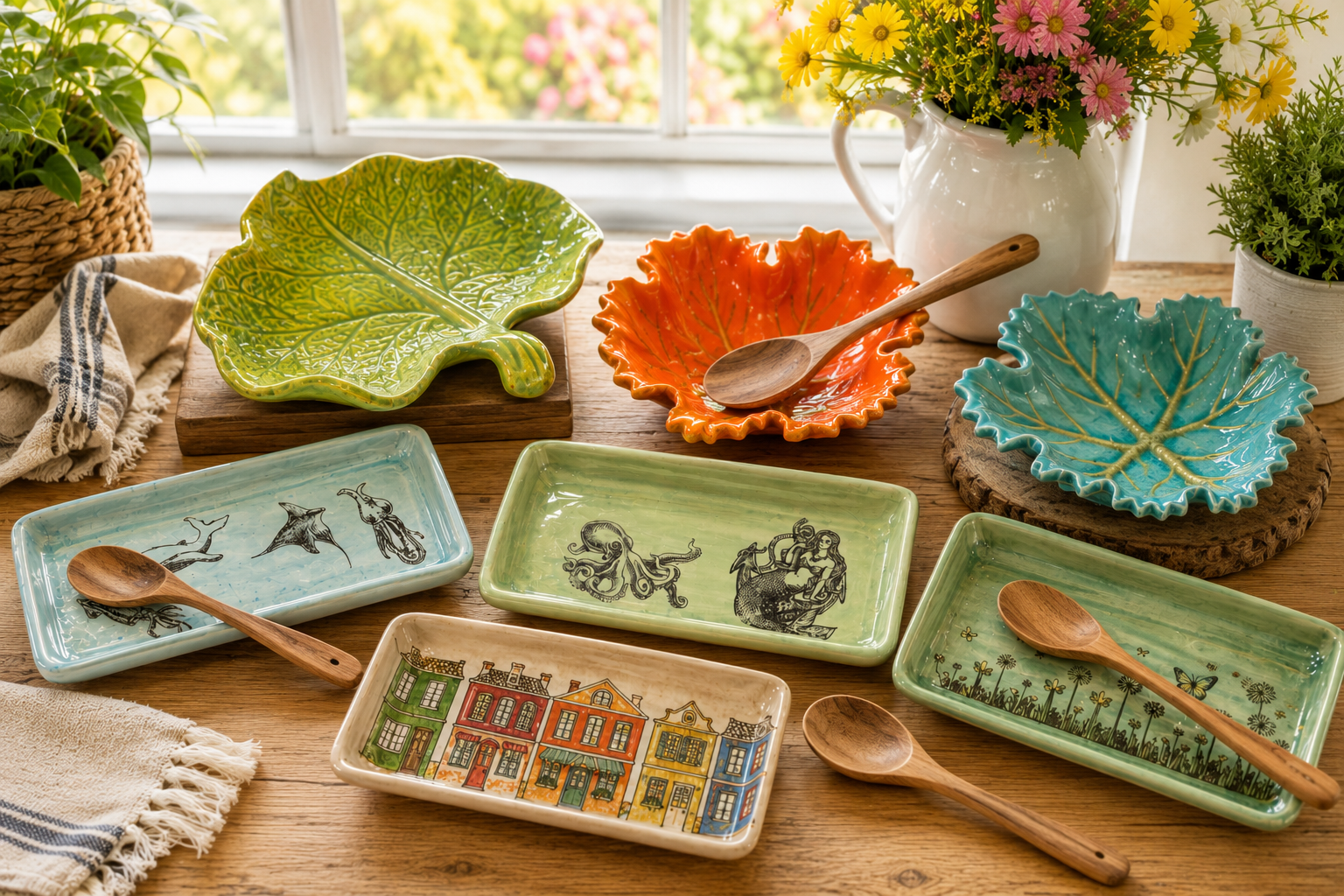
A wooden spoon balanced across a saucepan has a way of leaving a bright little trail of tomato sauce, butter, or broth exactly where it does not belong. Spoon rests solve that small kitchen problem, but a handmade ceramic one can do more than protect the counter. It can bring a favorite color, a leafy shape, a coastal detail, or a bit of cheerful character to the place where everyday meals come together.
For people who choose handmade pieces for their homes, the appeal is not simply having another kitchen tool. It is making room for useful objects that feel considered. A spoon rest sits in plain view while you cook, so it is a wonderful place for practical pottery to show a little personality.
Why Spoon Rests Earn Their Spot by the Stove
A spoon rest is a shallow dish designed to catch drips from the utensil currently doing the work. Set it beside the stovetop while stirring chili, sautéing vegetables, or making a favorite weekend gravy, and it keeps the messy end of the spoon off the counter. That means less wiping between steps and fewer sticky surprises after dinner.
Its usefulness is especially clear when a recipe asks for attention. If you are moving between a simmering pot, a cutting board, and a hot skillet, setting down a spoon should be effortless. A stable ceramic rest gives it a dedicated landing place. It also works nicely near a coffee bar for a honey dipper or teaspoon, beside a slow cooker at a potluck, or on a buffet table where serving utensils need somewhere tidy to wait.
There is a modest pleasure in that kind of order. Cooking can be lively, imperfect, and wonderfully aromatic without making every surface feel chaotic. One small dish handles the drips while adding a handcrafted accent to the room.
Choosing a Spoon Rest for Real Cooking
The prettiest piece is not always the best fit for every kitchen. Before choosing a spoon rest, think about the utensils you reach for most and where the piece will live. A compact rest can be charming beside a tea kettle or small saucepan. For a kitchen where long spatulas, ladles, and oversized wooden spoons are always in motion, a longer dish with a generous bowl is usually more practical.
Shape matters more than it first appears
A raised rim helps contain sauces and cooking oils, while a gently curved center gives the spoon a place to settle instead of slide. Leaf-inspired forms are lovely because the natural curve can guide the handle outward while the spoon bowl rests inside. A broad oval or elongated dish is often the most flexible choice for cooks who use several kinds of utensils.
Consider the countertop, too. A spoon rest should feel steady and have a base that sits flat. Handmade pottery carries subtle variations that make each piece its own, but it still needs to perform the simple job it was made for. If your cooking area is compact, choose a shape that tucks neatly between the stove and backsplash rather than competing with your prep space.
Color can be useful, not just decorative
Glaze color changes the feeling of a kitchen in an instant. A soft seafoam or ocean blue can cool down warm wood cabinets and bring a little coastal calm to a busy stove. Earthy greens and browns pair beautifully with herb pots, wood utensils, and nature-inspired décor. A brighter glaze can become a happy focal point in an otherwise neutral kitchen.
There is also a practical side to color. Deep, variegated glazes can be forgiving between washings, while pale glossy finishes make it easy to see when the dish needs a rinse. Neither option is better across the board. It depends on the look you love and how you cook.
Match the piece to your home, not a trend
A spoon rest does not need to match every plate and mug in the cabinet. In fact, a handmade ceramic accent often looks best when it brings a little contrast. A whimsical animal detail can soften a clean, modern kitchen. A leafy dish can connect a cooking space to nearby houseplants. A small fantasy-inspired piece can feel right at home in a kitchen where a dragon magnet, unusual art print, or beloved collection already tells part of the story.
The goal is not a showroom-perfect counter. It is a kitchen that feels like yours.
What Makes Handmade Ceramic Spoon Rests Different
Factory-made accessories are built for repetition. Handmade ceramics celebrate the gentle differences that occur when a real person shapes, cleans, finishes, glazes, and kiln-fires each piece. Those differences might appear in the way a glaze pools in a curve, the depth of a color, or the soft detail along a sculpted edge.
The studio process begins long before a finished spoon rest reaches a kitchen. Clay is formed, often through careful slip-casting for detailed shapes, then cleaned and refined by hand. After drying, the piece is fired, glazed, and fired again. Each stage asks for patience. Clay can shift as it dries, glaze can break differently over texture, and kiln heat brings its own bit of surprise.
That is part of the magic. The finished dish is not trying to impersonate something made by a machine. It is a useful little work of ceramic art, made to be handled, noticed, and put to work.
Handmade does come with a trade-off worth respecting. Ceramic can chip or crack if dropped, and care recommendations vary by glaze and finish. Check the maker’s guidance before putting any piece in a dishwasher or microwave. When in doubt, hand washing with mild soap and drying it before storing is a gentle way to preserve the surface and color.
A Small Gift With a Big Everyday Presence
Spoon rests make especially thoughtful gifts because they solve a problem almost everyone recognizes, yet they are personal enough to feel chosen rather than automatic. They suit housewarming baskets, wedding gifts, holiday packages, hostess presents, and care packages for a friend who has just moved into a first apartment.
For a more meaningful gift, choose a motif that connects to the recipient. A leaf form works beautifully for a plant lover. A coastal color suits someone who dreams of beach days. A whimsical creature or fantasy detail can make an ordinary kitchen feel more like their own imaginative corner of the world. Pair the rest with a favorite recipe written on a card, a bag of local coffee, or a wooden spoon, and the gift becomes both useful and warm.
It is also a lovely choice for the person who says they do not need anything. They may not have asked for a place to set their stirring spoon, but once they use one, it tends to become part of the kitchen rhythm very quickly.
Styling Spoon Rests Beyond the Stove
Although their main purpose is clear, spoon rests are wonderfully adaptable. Place one near the sink to hold a scrub brush between uses, or use it on a vanity for a small perfume roller, hair clip, or ring taken off before washing hands. On a desk, it can catch paper clips, a favorite pen, or the tiny odds and ends that otherwise wander away.
This is where decorative shape matters. A ceramic leaf dish can feel at home holding jewelry just as easily as it holds a serving spoon. A small sculptural rest can become a tiny accent on an open shelf when it is not cooking time. Functional pottery earns its keep in more than one room.
That flexibility is especially welcome in smaller homes, where every object benefits from having a purpose and a point of view. Rather than hiding useful things in drawers, choose pieces you are happy to leave out.
Let the Counter Tell a Little Story
The most inviting kitchens are rarely built from one matching set. They gather their charm through pieces that have been chosen slowly: the mug with a favorite handle, the bowl used for pancake batter, the planter by the window, the spoon rest that catches drips during a late-night soup.
A handmade ceramic spoon rest may be small, but it participates in those daily rituals. Let it carry a color that makes you smile, a natural form that echoes your home, or a whimsical detail that feels like a tiny companion beside the stove. The next time dinner calls for one more stir, there will be a beautiful place to set the spoon down.
See More of My Work If you enjoyed this article and would like to see more of my handcrafted pottery, bonsai pots, and ceramic artwork, visit my Etsy shop at https://billyscreationstx.etsy.com. Thank you for supporting handmade art.