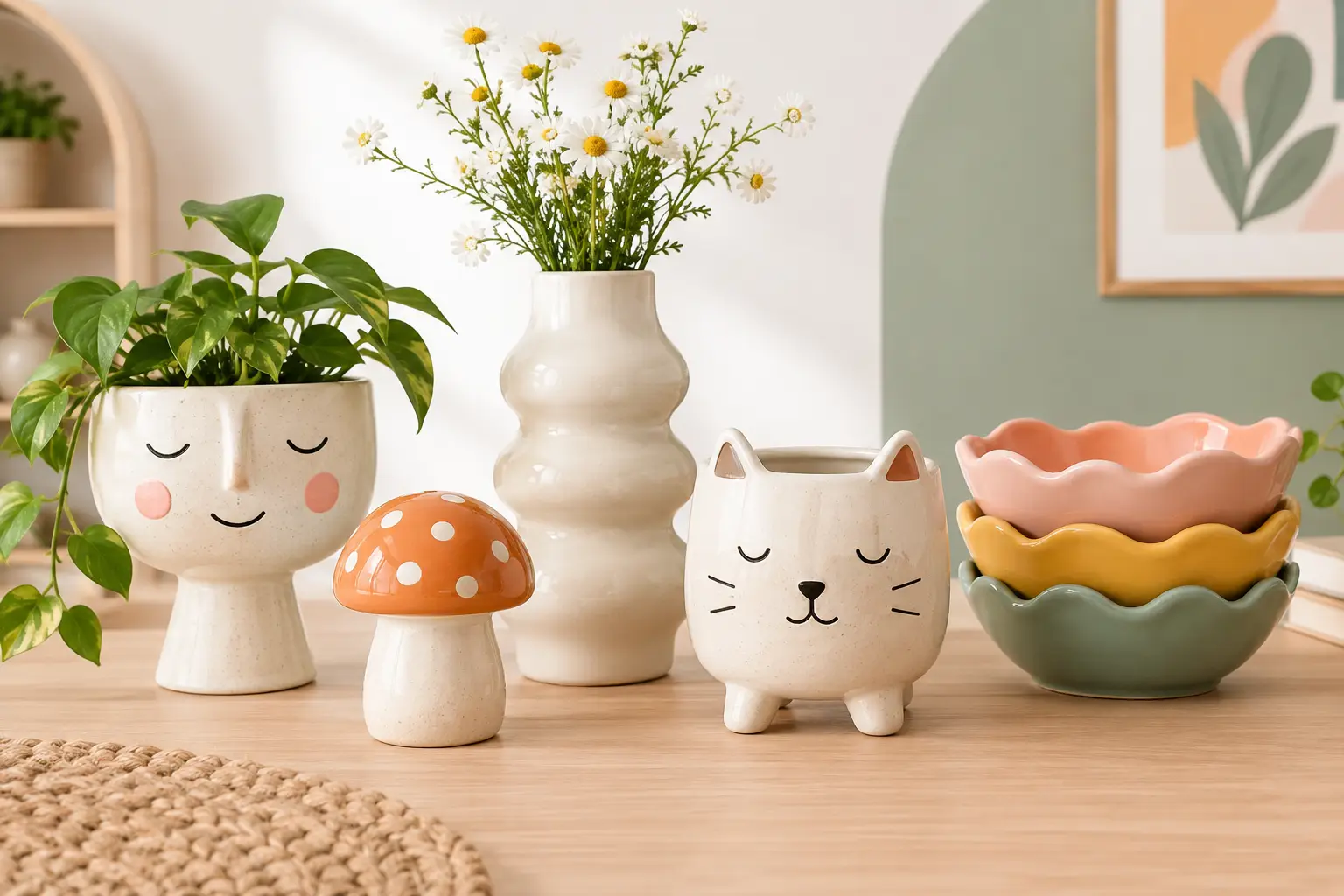
A plain ceramic piece can become a tiny green dragon guarding a bookshelf, a leaf dish that catches rings by the sink, or a bonsai pot that makes a favorite tree feel truly at home. That personal transformation is at the heart of DIY ceramic trends 2026. This year, makers and decorators are choosing pieces with texture, purpose, and a little story behind them rather than filling a room with matching factory décor.
Ceramics are especially satisfying because they invite both practical use and creative play. A hand-painted bisque gnome can become a family craft-night keepsake. A small planter can show off a houseplant while adding color to a sunny windowsill. Even the imperfect little variations in a handmade glaze can make an object feel more alive than something stamped out by the thousands.
DIY Ceramic Trends 2026: More Personality, Less Matching
The strongest ceramic trend for 2026 is not one color or one shape. It is permission to choose objects that feel personal. Homes are moving away from the idea that every surface must coordinate perfectly. Instead, a kitchen might hold a useful spoon rest in a cheerful glaze, a favorite animal figurine, and a handmade trinket dish that carries the memory of a birthday or rainy afternoon spent painting.
This does not mean a room has to look cluttered. The trick is to repeat a feeling rather than duplicate an exact design. Nature-inspired pieces, earthy glazes, whimsical creatures, coastal details, and soft handmade texture can live together when they share a relaxed, collected character. A dragon on a mantel can make sense beside a botanical print if both bring warmth and imagination to the space.
For DIY painters, this shift is freeing. You do not have to copy a perfect social-media color palette. A bisque blank becomes more interesting when it reflects your own home, favorite colors, garden, or fantasy world.
Hand-Painted Bisque Becomes a Meaningful Project
Ready-to-paint bisque is having a well-earned moment because it offers a real hands-on craft without asking everyone to learn the full clay process first. Forming clay, casting, cleaning greenware, glazing, and kiln firing all take practice, time, and the right equipment. Painting a prepared ceramic blank lets beginners and experienced crafters enjoy the expressive part of the process while starting with a sturdy, shaped piece.
In 2026, expect to see more people treating ceramic painting as an occasion rather than a quick distraction. A painted animal can mark a child’s birthday. A castle can become a centerpiece for a fantasy-themed gathering. Small dishes make thoughtful group projects for a bridal shower, housewarming, or family holiday table.
The best approach depends on how the piece will be used. Decorative figurines can handle bold color experiments, metallic details, spots, stripes, and storybook faces. A dish intended for everyday use may call for a more considered finish and materials suited to its purpose. When in doubt, let the design follow the job the object needs to do.
Layered Color Beats Perfect Coverage
Flat, single-color painting has its place, but layered color is bringing handmade pieces to life in 2026. Think mossy green brushed over a darker base on a woodland gnome, pale blue washing into seafoam on a coastal shell, or warm brown settled into the lines of a textured animal figure. These effects do not need to be fussy. A little variation is part of the charm.
Try beginning with a deeper base color, then dry-brushing a lighter shade across raised details. Add a small accent color only where the eye needs a surprise: the inside of a dragon’s wing, a flower on a planter, or a tiny gold key on a castle door. Leaving every crevice perfectly uniform can make a handmade piece look less expressive, not more.
Planters Are Becoming Small Works of Art
Houseplants and bonsai remain a natural home for handmade ceramics. A plant pot is not just a container. It frames living color, gives roots a home, and creates a little scene wherever it sits. In 2026, plant lovers are seeking planters with visible character: hand-finished surfaces, gentle irregularities, sculpted details, and shapes that feel collected instead of generic.
For bonsai growers, proportion matters as much as decoration. The pot should support the visual balance of the tree rather than compete with it. A quiet earth-toned bonsai pot can let the trunk, foliage, and branching pattern take center stage. A more playful planter may be a better fit for a trailing pothos, colorful succulent arrangement, or an indoor herb that needs a cheerful kitchen perch.
Drainage is also more than a practical footnote. A beautiful planter should be chosen with the plant’s needs in mind. Some plants appreciate a pot designed for direct planting and drainage, while others work best in a nursery pot placed inside a decorative cachepot. Matching the vessel to the care routine helps the plant and the ceramic stay happy longer.
The Return of Earth, Water, and Woodland Motifs
Nature motifs are growing beyond the familiar leaf pattern. Expect to see pieces inspired by tide pools, shells, frogs, mushrooms, birds, wildflowers, desert textures, and the quiet geometry of branches. These designs work because they bring the outdoors inside without demanding a full themed room.
Coastal colors can be especially lovely in a bathroom, sunroom, or guest space: soft sand, misty blue, sea green, and weathered white. Woodland colors feel right in reading corners and plant shelves, where brown, fern green, mushroom cream, and rusty orange create a cozy, gathered mood. The goal is not to make everything look rustic. A glossy aqua glaze or a bright painted salamander can be just as natural in spirit as a matte earth-tone bowl.
Useful Ceramics Deserve the Same Attention as Collectibles
One of the most welcome DIY ceramic trends for 2026 is the blending of usefulness and delight. Spoon rests, jewelry dishes, trinket bowls, and small catchall plates are no longer treated as forgettable extras. They are tiny daily rituals made visible.
A spoon rest keeps a kitchen counter tidier, but it can also bring a flash of color beside the stove. A leaf dish can hold earrings, loose change, tea bags, or a key that always seems to wander. These smaller pieces are approachable gifts because they do not require someone to redesign a whole room. They simply make an everyday spot feel more considered.
When choosing functional ceramics, think about where the piece will live. A bold, sculptural dish may shine on an entry table. A lower-profile spoon rest is easier to use beside a busy cooktop. For gifting, consider the recipient’s habits instead of only their favorite color. The gardener may love a small tray for seed packets, while the fantasy reader may smile every time a tiny dragon guards their rings.
Whimsy Is Growing Up, Not Going Away
Fantasy ceramics are finding a place in adult homes because whimsy does not have to mean childish. A hand-finished dragon, castle, dinosaur, or gnome can be playful while still feeling artful. The difference often comes down to placement and restraint. One well-chosen figurine on a bookcase can feel like a discovery. A small collection on a mantel can tell a story.
In 2026, collectors are also mixing fantasy pieces with natural materials. A ceramic creature beside a trailing plant, a stack of worn books, or a framed wildlife image feels grounded rather than costume-like. This is a good reminder for DIY painters: give a whimsical subject a believable environment. Deep forest greens, stone grays, sandy neutrals, and aged-metal accents can make even a cheerful character feel at home in a grown-up space.
The Handmade Difference Is Part of the Design
There is a growing appreciation for the work that happens before a ceramic piece reaches a shelf. In a small studio, slip-cast pieces are cleaned, seams are refined, details are hand-finished, glazes are applied, and each firing brings its own small surprises. Color can shift slightly in the kiln. A glossy surface may pool differently around a raised texture. Those variations are not a flaw in handmade work. They are evidence that a real process took place.
That matters when choosing a DIY blank or a finished ceramic gift. A mass-produced object may be predictable, and sometimes predictability is useful. But handmade ceramics offer something else: the feeling that someone noticed the curve of the leaf, the scales on the dragon, or the edge of the dish before it came to live in your home.
About the Artist
Billy Williams is the artist behind Billy’s Creations TX, where he creates handcrafted ceramics, bonsai pots, wildlife photography, and other original artwork. To see more of his work or browse available pieces, visit his Etsy shop.
Whether you paint a bisque figure with your family, choose a small dish for a friend, or give a bonsai a pot with real presence, let the piece earn its place over time. The ceramics worth keeping are the ones that make an ordinary shelf, windowsill, or countertop feel a little more like yours.