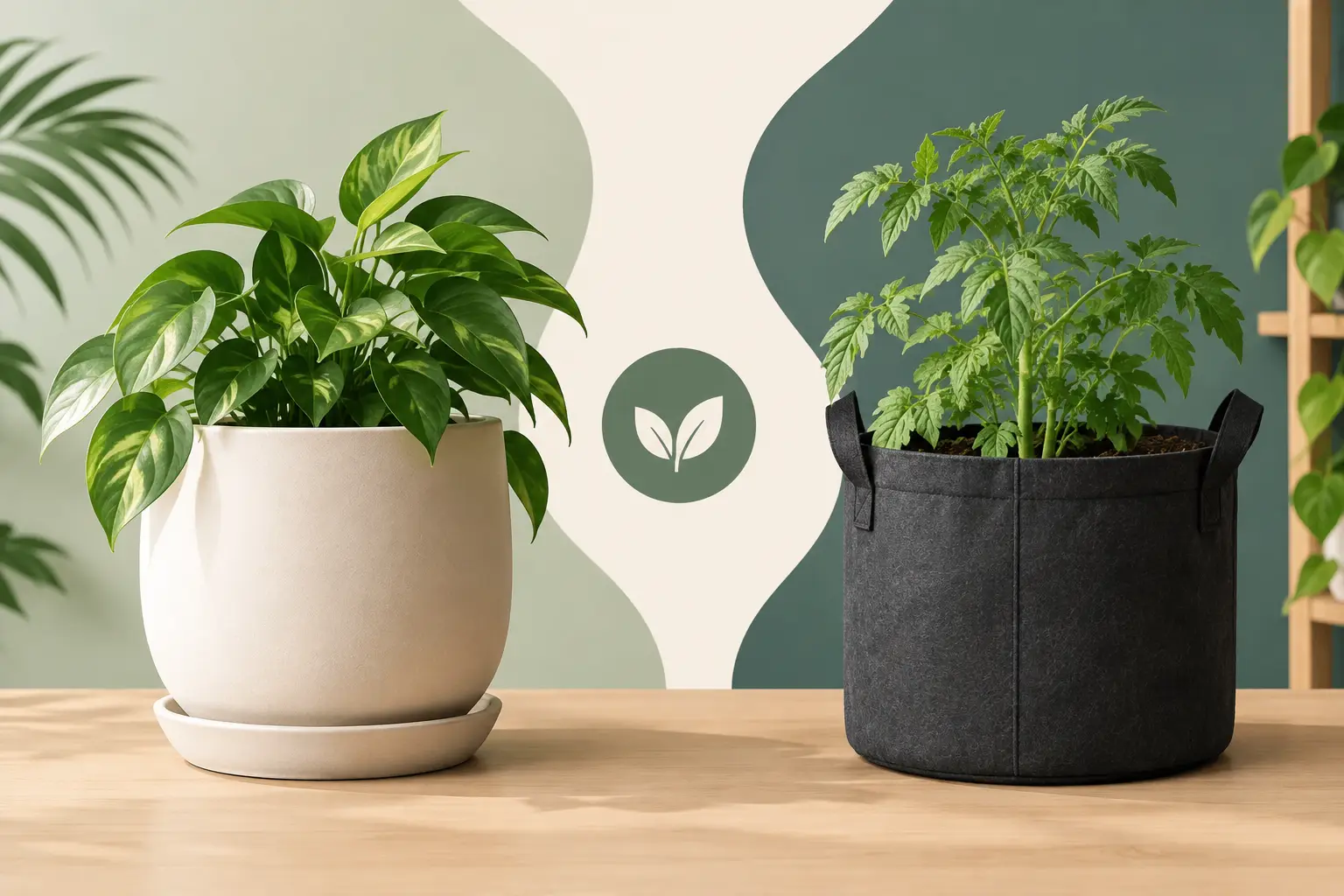
A favorite plant can look completely different depending on what holds its roots. A soft fabric grow bag gives a patio tomato or young tree room to breathe, while a glazed ceramic cachepot can turn an everyday nursery pot into a tiny piece of home decor. When weighing cachepot versus grow bag, the better choice is less about which container is “best” and more about where the plant lives, how you water, and whether you want the container to disappear into the background or become part of the display.
For plant lovers who enjoy handmade objects, that last detail matters. A planter can be practical, but it can also bring color, texture, and a little studio-made character to a windowsill, shelf, or bonsai bench.
Cachepot Versus Grow Bag: The Core Difference
A cachepot is a decorative outer pot, traditionally made without a drainage hole. The word comes from a French term for hiding a plant pot, which describes its job perfectly. A plant remains in its plastic nursery pot, complete with drainage holes, and that pot sits inside the cachepot. When it is time to water, you lift the inner pot out, let excess water drain, and return it once it is no longer dripping.
A grow bag is a breathable fabric container designed for growing directly in soil. Most are made from felt-like nonwoven material, with stitched handles on larger sizes. Water drains through the bottom and sides, air reaches the root zone, and the bag is usually placed outdoors or on a tray where runoff will not be a problem.
Both can be useful plant homes. They simply solve different problems. A cachepot is mainly about presentation and flexibility indoors. A grow bag is mainly about active root growth, drainage, and easy seasonal gardening.
When a Cachepot Makes the Most Sense
A cachepot shines where you want a plant to feel at home among the rest of your decor. It hides the plain plastic nursery container that many houseplants arrive in, without forcing you to repot the plant immediately. That is especially helpful after bringing home a new pothos, philodendron, fern, or flowering gift plant that needs time to settle before its roots are disturbed.
Ceramic cachepots also bring visual weight and personality. A hand-finished piece may have gentle variations in glaze, tiny details from the making process, or a shape that feels more like a found treasure than a standard planter. A leafy little plant can look charming in a woodland-inspired pot, while a sculptural succulent may suit a glossy, simple form that lets its silhouette do the talking.
The practical advantage is that you can remove the plant for care. If you are unsure whether a plant is ready for water, take its nursery pot to the sink, water thoroughly, allow it to drain, then place it back inside the cachepot. This protects tabletops and shelves while preserving the drainage the grower intended.
The catch is easy to overlook: never let water collect in the bottom. If runoff sits beneath the nursery pot, roots may remain wet even though the plant appears to have drainage. Check the cachepot after watering, especially with plants that dislike damp feet, such as snake plants, hoyas, and many succulents. A thin cork pad, a few small risers, or simply emptying excess water promptly can help keep the root ball from resting in moisture.
Best uses for cachepots
Cachepots are especially suited to indoor houseplants, gift plants, small orchids in nursery liners, seasonal arrangements, and plants you may want to move around the house. They are also lovely for a matching collection: a small pot on a desk, a medium one on a bookshelf, and a larger statement piece near a bright window.
They can work outdoors in covered spaces, too, but a fully exposed ceramic cachepot may collect rainwater. On a porch or patio, use it where you can monitor it, or bring it in during long wet spells.
When a Grow Bag Is the Better Tool
Grow bags earn their place in a sunny, working garden. Their fabric walls allow air movement around the root zone, and that airflow naturally encourages roots to branch instead of circling endlessly along a hard container wall. Gardeners often call this air pruning. When a root reaches the airy edge of the bag, its tip stops extending in that direction and the plant develops more fine feeder roots behind it.
That can be useful for vegetables, herbs, potatoes, peppers, young fruit trees, and plants being grown temporarily before moving into the ground or a more permanent container. Grow bags are lightweight before filling, easy to store at the end of a season, and available in sizes large enough for serious patio growing.
They are not quite as carefree as they first appear. Because fabric breathes and drains so freely, potting mix dries faster than it does in glazed ceramic or plastic. That is a gift during rainy weather or for plants vulnerable to rot, but it may mean daily watering during a hot Texas summer. A black fabric bag sitting on a sun-baked patio can dry surprisingly fast.
Use a quality potting mix rather than dense garden soil. Raise the bag slightly off concrete if possible so the bottom can drain freely, and mulch the surface with straw, bark, or shredded leaves to slow evaporation. If you are growing a large tomato, pepper, or flowering annual, begin feeding regularly once the nutrients in fresh mix are used up. Frequent watering washes nutrients out faster.
Best uses for grow bags
Grow bags are a natural fit for edible gardens, rental-friendly patios, temporary growing projects, and anyone who wants a flexible garden layout. You can shift bags to catch more sun, group thirsty plants together, or fold the empty bags away after the season.
For bonsai, a grow bag can sometimes be useful during a development phase, especially when the goal is to build a vigorous root system and thicken a young tree. It is usually not the final display choice, though. A bonsai meant for viewing deserves a pot that complements its trunk, foliage, and sense of scale. That is where a carefully chosen ceramic bonsai pot becomes part of the art rather than just a container.
Drainage Is the Decision Maker
If your plant will be planted directly into the container, drainage should lead the conversation. A grow bag is built for it. A traditional cachepot is not.
It is possible to plant directly into some decorative ceramic pots if they have drainage holes, but then they are functioning as planters rather than cachepots. That distinction matters when shopping or planning a display. A true cachepot needs a separate draining nursery pot inside it. A planter with a hole can hold soil and roots directly, provided it has a saucer or another way to protect the surface beneath it.
For a houseplant owner who has accidentally watered too generously, the nursery-pot-and-cachepot arrangement offers a forgiving routine. For a gardener who wants vigorous herbs on a sunny deck, direct planting in a grow bag is far more practical.
Think About the Plant’s Future, Not Just Today
A small basil plant may be happy in a grow bag for one warm season. A jade plant could live for years in a decorative cachepot arrangement, moving up only when its nursery container becomes crowded. A young ficus being trained for bonsai may spend time in a grow bag, then graduate to a shallow ceramic pot once the structure of the tree is ready to be appreciated.
That is why the answer often changes as the plant changes. Grow bags support the messy, energetic growing stage. Cachepots support the lived-in, decorative stage, when a plant is sharing space with books, pottery, artwork, and the small daily rituals of home.
Style, Material, and the Joy of a Handmade Pot
Grow bags have an honest, utilitarian look. Their soft sides and dark fabric fade into a garden setting, which is perfect when foliage and harvest are the main event. They are not usually chosen for a dining table centerpiece or a carefully styled mantel.
Ceramic cachepots offer a different kind of pleasure. Clay begins as a soft, workable material, then is shaped, cleaned, finished, glazed, and kiln fired into something enduring. Small-batch pottery retains traces of that journey. The surface may catch the light differently from one angle to another. A hand-painted detail can make a simple plant feel like part of a tiny story.
That does not make ceramic automatically better. It makes it better for a different purpose. A whimsical animal cachepot may be just right for a child’s room or a gift for a plant-loving friend, while a row of grow bags may be exactly what a serious pepper gardener needs outside.
About the Artist
Billy Williams is the artist behind Billy’s Creations TX, where he creates handcrafted ceramics, bonsai pots, wildlife photography, and other original artwork. His work celebrates useful objects with a little extra imagination, from plantware made for everyday growing to ceramics that bring a handmade spark to a favorite corner of the home.
Choose the container that supports the life your plant is living right now. Give hungry roots air and room in a grow bag, or let a well-drained nursery pot nest inside a ceramic cachepot that makes you smile whenever you pass it.