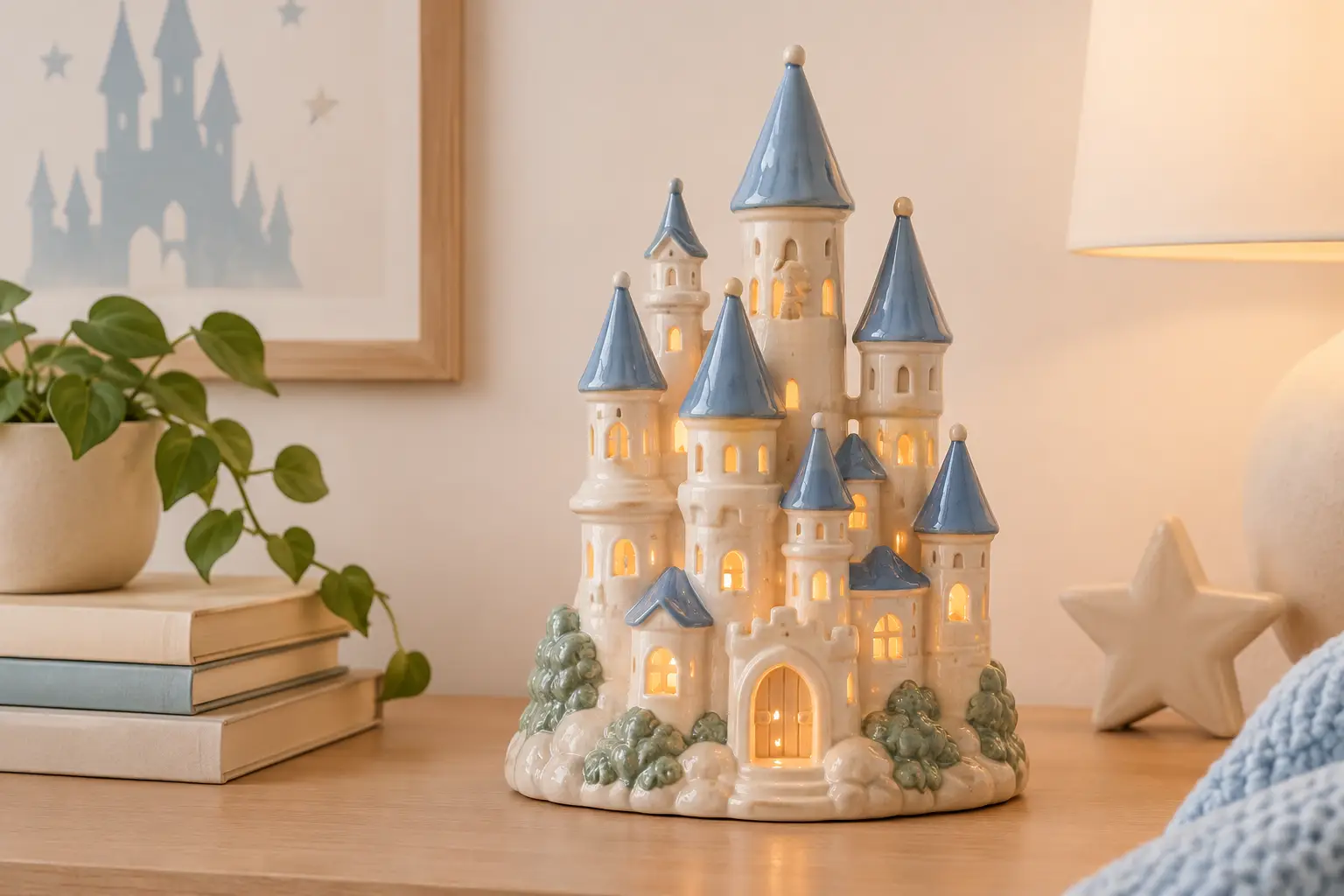
A tiny tower on a bookshelf can do more than fill an empty spot. It can turn a quiet corner into a place where a dragon might be resting behind the books, a gnome might be tending a hidden garden, or a favorite childhood story feels close again. Ceramic castles carry that kind of cheerful possibility. They are decorative objects, certainly, but they are also little invitations to let your home feel more personal, playful, and wonderfully unlike everyone else’s.
For collectors, fantasy lovers, and gift shoppers, a handmade castle has a presence that factory-made décor often misses. The slightly raised details, the glint of glaze over a roofline, and the character in every hand-finished window all make a small sculpture feel like it has its own story.
Why Ceramic Castles Have Lasting Charm
Castles have always belonged to the imagination. They bring to mind old fairy tales, brave knights, hidden treasure, enchanted forests, and dragons circling high above the towers. A ceramic version fits that big sense of wonder into a displayable size, making it easy to enjoy every day.
They also work across more decorating styles than people expect. A richly glazed fantasy castle can become a colorful focal point in an eclectic living room. A softly finished castle in earthy tones feels right at home beside houseplants, natural wood, and handmade pottery. A small unfinished bisque castle can become a creative family project, painted in bright storybook colors or made to match a favorite room.
The best choice depends on where it will live. A bold, detailed piece suits a mantel, bookcase, or display cabinet where it can be seen up close. A smaller castle is lovely on a desk, tucked among potted plants, or placed beside a jewelry dish and a few favorite keepsakes. The goal is not to make every corner look themed. It is to give one corner a spark of personality.
The Handmade Difference in Ceramic Castles
A handmade ceramic castle begins long before the final glaze catches the light. In a working studio, the piece may be slip-cast, then carefully cleaned and refined after it is removed from the mold. Seams are softened, little imperfections are addressed, and the details that give the sculpture its character are checked by hand.
After the ceramic has dried, it is fired in the kiln to become bisque. At this stage, the castle is sturdy but still ready for color. Glazing brings a whole new layer of expression. A deep blue roof can suggest a midnight kingdom. Mossy greens can make a castle look as though it has stood in a secret forest for centuries. Sandy neutrals and ocean-inspired colors can give the piece a coastal, weathered feeling.
Because glazing and kiln firing involve heat, chemistry, and a bit of studio magic, no two finished pieces will look exactly alike. Color can settle differently in tiny crevices. Gloss may pool gently near a window or along a turret. Those variations are not a flaw to be hidden. They are part of what makes artisan ceramics feel alive.
Mass-produced décor is designed for sameness. Hand-finished ceramics are made with room for individuality. That distinction matters when you are choosing something meant to be kept, displayed, or given to someone who appreciates objects with a little more soul.
Glaze Changes the Mood
The same castle form can feel completely different depending on its finish. Glossy glaze gives a piece a jewel-like, storybook look. Matte or softly textured surfaces can create a more rustic, old-world feeling. Bright colors lean playful and whimsical, while natural earth tones let the sculptural shape take center stage.
When choosing a glazed castle, look at the colors already in the room. You can match a piece to a favorite throw pillow, art print, or planter, but contrast can be just as charming. A bright blue castle against a warm wood shelf, for example, creates a small but memorable visual surprise.
Ways to Display a Ceramic Castle at Home
A castle does not need a sprawling fantasy collection around it to make an impression. Sometimes a single piece placed with care is enough. On a bookshelf, try setting it between novels, nature books, or framed photographs. A small arrangement of dried moss, smooth stones, or a trailing plant nearby can build a gentle woodland feeling without turning the shelf into a stage set.
For plant lovers, castles pair especially well with bonsai pots and small planters. A miniature castle beside a bonsai can suggest a tiny landscape shaped over time. Near a succulent or pothos, it feels like an unexpected garden treasure. Keep the ceramic sculpture on a stable surface rather than in soil or a spot that stays wet, especially if it has a decorative glaze that deserves to stay clean and bright.
A mantel is another natural setting. Place a castle near seasonal greenery, small animal figurines, or a few carefully chosen candles. Leave some open space around it. Handmade pieces often look strongest when they are not crowded by too many other objects.
Ceramic castles also make charming desk companions. A little bit of fantasy can soften a home office, brighten a creative workspace, or make a reading nook feel more inviting. Just keep the piece away from the edge of a busy desk where it may get bumped by coffee mugs, notebooks, or charging cords.
A Gift With a Story Already Started
A ceramic castle is a thoughtful gift because it feels specific. It suits the friend who collects dragons, the child at heart who still loves fairy tales, the gardener who enjoys miniature worlds, or the person moving into a new home and starting fresh. Unlike generic décor, it gives the recipient something they can build a story around.
For a birthday or housewarming gift, consider the recipient’s style rather than choosing the most elaborate piece automatically. Someone who loves bright colors may enjoy a cheerful glazed castle with playful details. A collector with a moody library or dark-academia-inspired space may prefer deep greens, browns, blues, or stone-like finishes.
Unfinished bisque castles offer a different kind of gift. They invite the recipient to become part of the making process. Painting a bisque piece can be a relaxing solo project, a rainy-day activity for families, or a creative gathering with friends. Acrylic paint is often a practical choice for decorative craft projects, though the finished piece should be handled gently unless it is professionally glazed and fired.
Caring for a Handmade Castle
Ceramic sculptures are durable, but they appreciate thoughtful handling. Dust them with a soft, dry cloth or a clean soft brush, especially around textured rooflines and small windows. If a piece needs more attention, use a lightly damp cloth and dry it promptly. Avoid harsh cleaners, abrasive scrubbing pads, and sudden temperature changes.
Display location matters, too. A ceramic castle is happiest on a level, secure surface away from places where it can be knocked over. If you are decorating a covered porch or protected patio, be mindful of changing weather. Not every ceramic piece is intended for outdoor exposure or freezing temperatures, and a decorative finish can age differently in sun, rain, and cold.
Treating handmade pottery with a little care helps preserve the glaze, the details, and the memories attached to it. Over time, a well-loved castle may become one of those objects guests notice first and family members always associate with home.
About the Artist
Billy Williams is the artist behind Billy’s Creations TX, where he creates handcrafted ceramics, bonsai pots, wildlife photography, and other original artwork. His work celebrates the satisfying, hands-on process of shaping, finishing, glazing, and firing pieces meant to bring useful beauty and a touch of imagination into everyday spaces.
Whether you place one on a shelf, pair it with a favorite plant, or give it to someone who still believes in dragons, a small ceramic castle is a lovely reminder that a home can hold practical things and a little magic, too.