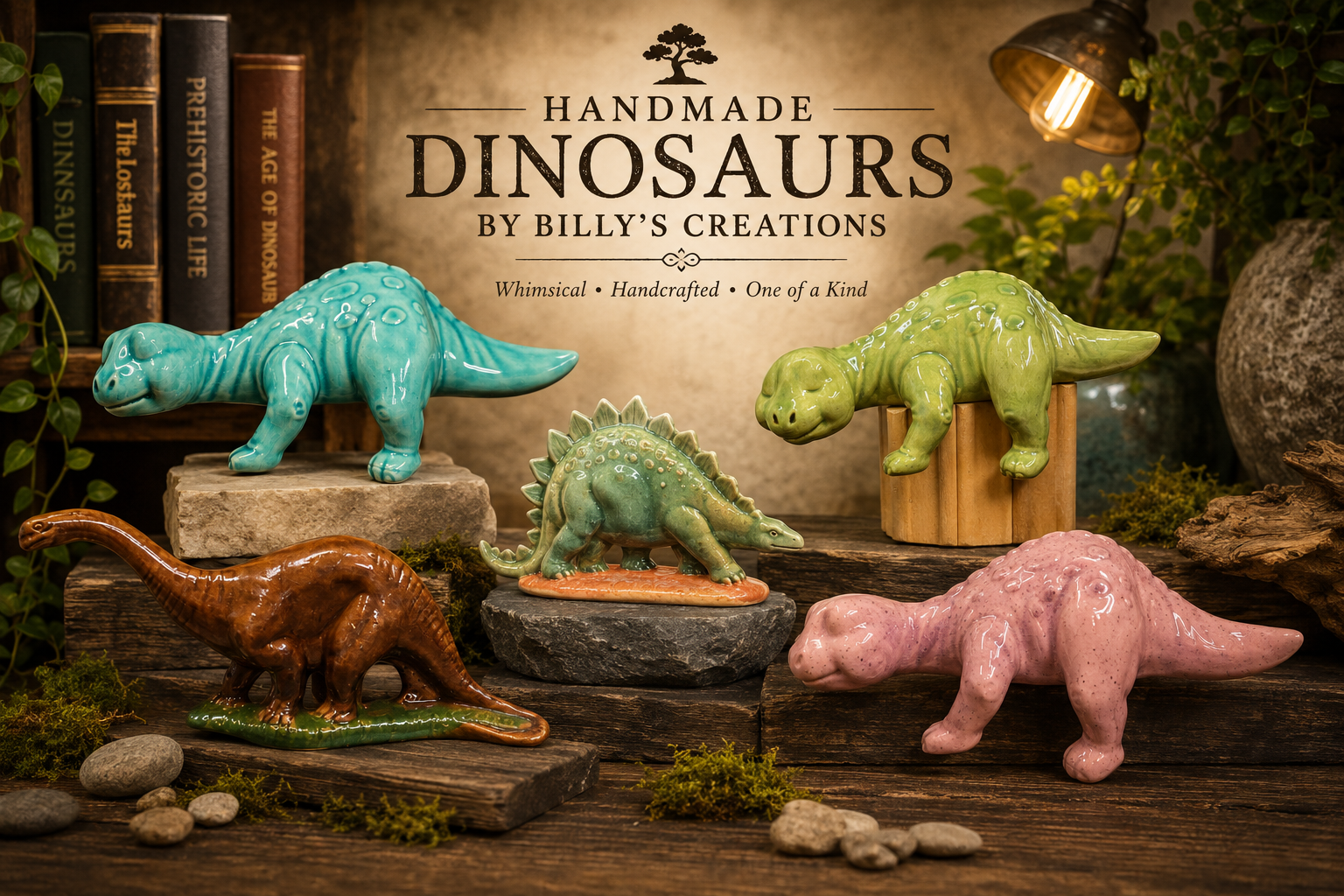
A tiny dinosaur on a bookshelf has a way of changing the whole mood of a room. Ceramic dinosaur figurines bring a little prehistoric wonder to spaces that might otherwise feel too polished, too plain, or too serious. They are playful without being childish, collectible without requiring a display case, and full of personality when they are shaped, glazed, and kiln fired by hand.
For dinosaur fans, eclectic decorators, and gift shoppers, the appeal is not just in the subject. It is in the object itself: the satisfying weight of fired clay, the subtle variation in a glaze, and the small evidence of a studio process that no factory line can quite duplicate.
Why Ceramic Dinosaur Figurines Feel So Special
Dinosaurs have never really left our imaginations. A long-necked sauropod can feel gentle and storybook-like, while a toothy theropod adds a touch of mischief to a desk or plant shelf. In ceramic form, those familiar creatures become something more tactile. Clay softens the hard edges of a prehistoric beast and gives it a warm, collected-over-time quality.
A handmade ceramic dinosaur is also more than a novelty. It can be a cheerful accent beside a favorite framed print, a companion for a small bonsai pot, or a memorable piece on a child’s bookshelf that still suits the rest of the home. Adults often enjoy dinosaur décor precisely because it carries a bit of wonder. It says the room belongs to someone with interests, humor, and a fondness for the unexpected.
The handmade difference shows up in quiet ways. One figurine may have a slightly deeper green in its glaze, another a more pronounced texture along the back, or a tiny variation in the way light catches its surface. Those details are not flaws to be corrected away. They are part of the charm of small-batch ceramics.
From Clay Slip to Kiln-Fired Character
Ceramic figurines begin with a process that requires patience at every stage. In a studio setting, a dinosaur may be formed through slip-casting, where liquid clay is poured into a mold and allowed to build a clay wall inside it. Once the form is ready, it is carefully removed, cleaned, and refined by hand.
This is where a small ceramic creature starts to develop its own character. Seams need attention. Rough spots are smoothed. Fine areas around feet, tails, teeth, or scales must be handled carefully so the finished piece feels intentional from every angle. After the clay dries, it goes through its first kiln firing, becoming bisque: solid, porous ceramic ready for glaze or paint.
Glazing adds another layer of magic. A glossy turquoise can make a dinosaur feel wonderfully fantastical, while earthy greens, browns, and stone-like finishes can lean more natural and ancient. Some collectors love bright color. Others prefer an unglazed bisque dinosaur that can be painted at home in any palette they imagine.
After glaze is applied, the figurine returns to the kiln. Heat transforms the surface, often revealing colors and variation that cannot be fully predicted before firing. That little element of surprise is one reason handmade ceramics stay so interesting. The maker guides the process, but the kiln contributes its own final touch.
Choosing a Dinosaur for Your Space
The best figurine depends less on rules and more on the feeling you want to create. A small dinosaur tucked beside a lamp or stacked books can be an easy, low-commitment way to bring whimsy into a room. A larger piece may work better as a focal point on a mantel, open shelf, or entryway table.
Consider color first. A glossy, brightly glazed dinosaur can wake up a neutral room, especially among natural wood, linen, or simple white pottery. If your home already has plenty of pattern and color, a softer matte or earth-toned ceramic dinosaur may blend in more gracefully while still adding personality.
Scale matters, too. Tiny figurines look wonderful in groups, on a windowsill, or near a small indoor plant. They can also make a desk feel more personal without taking over valuable work space. Larger figures need a little breathing room. Give them a clear shelf or tabletop where their silhouette can be appreciated instead of crowded by too many competing objects.
There is a practical trade-off to keep in mind. Ceramic is sturdier and more substantial than a lightweight plastic figure, but it is still breakable. A long tail, narrow legs, or delicate spikes deserve a stable location away from the edge of a table. For households with energetic pets or very young children, a lower, protected shelf or a display cabinet may be the better choice.
A Few Display Ideas That Feel Personal
Pair a dinosaur with a small plant or bonsai for a playful prehistoric landscape. Place one beside a stack of travel books, nature guides, or favorite novels. Let a single figurine sit on a kitchen windowsill, where morning light can show off its glaze. For a collection, group pieces by color, species, or finish rather than lining them up in a perfect row.
The goal is not to make your home look like a museum exhibit. It is to create a little visual discovery. A dinosaur peeking out from a shelf of pottery, artwork, and plants makes a space feel lived in and loved.
A Gift With More Personality Than the Usual Choice
Ceramic dinosaur figurines make especially thoughtful gifts because they suit many ages and occasions. They are a sweet choice for a dinosaur-loving child, but they also work for a friend who collects oddities, a coworker with a playful desk setup, or an adult celebrating a birthday, graduation, new home, or new job.
The best gifts have a sense of recognition behind them. A dinosaur says, “I noticed what makes you smile.” When the piece is handmade, it adds another layer of thoughtfulness. Rather than giving something that could be found in every big-box store, you are choosing an object that passed through a real studio and was finished with care.
If you are buying for someone whose taste you do not know well, choose a classic form and a versatile glaze. Greens, blues, cream, and earthy neutrals tend to work in many homes. If you know they enjoy bold color or fantasy décor, that is the perfect time to choose a more unusual finish.
The Fun of Ready-to-Paint Dinosaur Bisque
Unfinished bisque dinosaur figurines offer a different kind of joy. Instead of choosing a finished glaze, you get to become part of the creative process. Bisque has a soft, chalky ceramic surface that takes paint beautifully, making it a satisfying project for families, hobby painters, classrooms, and anyone who wants a personal keepsake.
A ready-to-paint dinosaur does not need to be scientifically accurate unless that is the fun of it. Paint it with natural reptile colors, give it rainbow stripes, add flowers, make it look like a galaxy, or match it to a bedroom color scheme. Acrylic craft paints are often a simple choice for decorative indoor pieces. If the project needs to withstand moisture or regular handling, ask about appropriate sealers and follow the product directions carefully.
For young painters, simpler color blocking can look charming. For experienced makers, dry brushing can emphasize scales and texture, while metallic details can give horns, claws, or ridges a magical finish. Either way, the finished figure becomes more than décor. It becomes a memory of time spent making something.
Caring for Handmade Ceramic Dinosaurs
A finished ceramic figurine asks for very little care. Dust it gently with a soft, dry cloth or a soft brush that can reach around textured details. For a glazed piece that needs a bit more cleaning, a lightly damp cloth is usually enough, followed by careful drying. Avoid harsh abrasives, which can dull a glossy surface or scratch delicate finishes.
Keep decorative ceramics away from sudden temperature changes, especially if they are not intended for outdoor use. A windowsill can be lovely, but avoid locations where direct sun and heat become extreme. If you need to move a figurine, support the body with both hands instead of lifting it by a tail, neck, or other narrow feature.
The nicest thing about a handmade dinosaur is that it does not have to match anything perfectly. Let it be the curious little creature on the shelf, the glazed green guardian of a houseplant, or the painted treasure made during a rainy afternoon. A small piece of ceramic wonder can make an ordinary corner feel like it has a story to tell.
About the Artist
Billy Williams is the artist behind Billy’s Creations TX, where he creates handcrafted ceramics, bonsai pots, wildlife photography, and other original artwork. To see more of his work or browse available pieces, visit https://billyscreationstx.etsy.com.
Choose the dinosaur that makes you grin first. That instinct is often the best guide to a piece you will enjoy seeing every day.