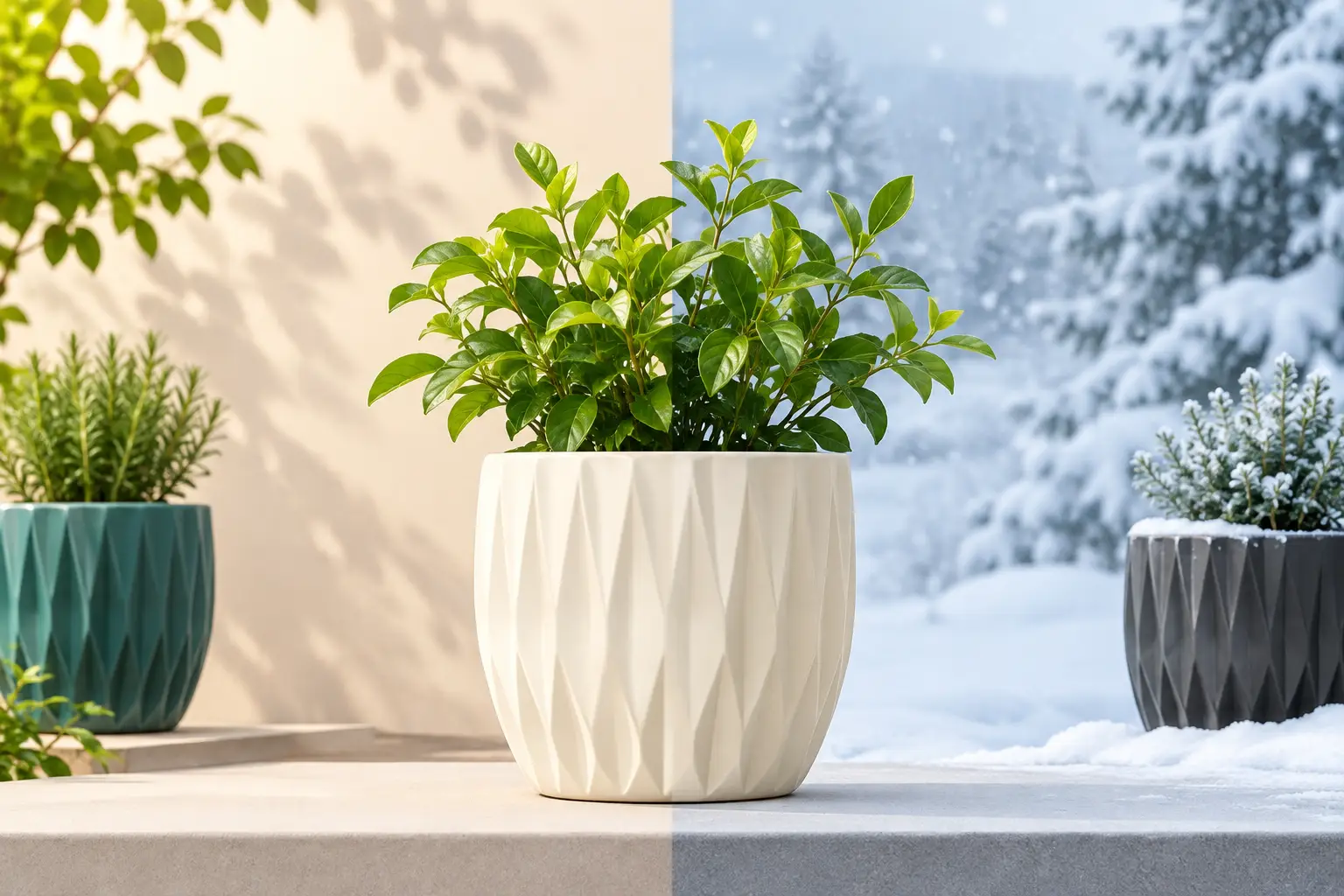
A sunny patio can make a ceramic planter look indestructible. Then comes a hard freeze, and a favorite pot may show a hairline crack, a chipped rim, or a broken base by morning. So, are ceramic planters frost resistant? Some are, but ceramic alone is not a promise that a planter can live outside through every winter.
The difference comes down to the clay body, the firing temperature, the way the pot holds water, and the conditions where it spends the cold season. A handmade planter deserves the same thoughtful placement as the little tree, trailing vine, or flowering plant it holds.
Are Ceramic Planters Frost Resistant?
A ceramic planter is frost resistant when its clay body has been fired densely enough to absorb very little water. Low water absorption matters because water expands when it freezes. If moisture has soaked into the walls or base of a pot, that expansion can create pressure from within. Repeated freeze-thaw cycles are especially hard on ceramic, gradually turning a tiny weakness into a visible crack.
Many stoneware and porcelain planters are more suitable for cold weather than low-fired earthenware. They are typically fired at higher temperatures, which makes the clay more vitrified, or glass-like and dense. That does not mean every stoneware planter is automatically freeze-proof. The final firing, the clay recipe, the thickness of the form, and the amount of water the pot encounters all still matter.
Glaze adds color, shine, and a protective surface, but it is not a winter force field. A glossy glaze can reduce surface moisture, yet the unglazed foot, drainage hole, tiny glaze crazing lines, or an imperfectly sealed area may still take in water. Think of glaze as one helpful layer in the story, not the entire answer.
Why Handmade Pots Need a Little Winter Wisdom
Hand-finished ceramics have personality. You can see it in a softly rounded rim, a carved texture, a deep woodland green, or a glaze that breaks into warmer color along an edge after kiln firing. Those details make a bonsai pot or decorative planter feel more like part of a home than a generic container from a big-box shelf.
They also deserve practical care. A small-batch ceramic piece is shaped, cleaned, finished, glazed, and kiln fired by hand. It is made to be enjoyed, but outdoor winter exposure is one of the toughest jobs any planter can face.
Texas gardeners may not deal with months of snow, but sudden hard freezes can arrive after mild, wet weather. That particular pattern can be rough on pots: rain wets the clay and soil, temperatures drop overnight, then everything warms again. In colder parts of the country, a planter left outdoors may face this cycle many times before spring.
A pot can also be structurally sound and still crack because of what is inside it. Saturated soil presses against the walls as it freezes, especially in a tightly planted container with poor drainage. A root ball can add pressure too. The planter is not always the only thing that failed – the conditions around it often tell the real story.
What Makes a Ceramic Planter More Likely to Survive Frost?
Start with the maker’s description. Look for language such as high-fired stoneware, porcelain, vitrified clay, frost resistant, or outdoor-safe. If a listing simply says “ceramic,” it is reasonable to ask how the piece was fired and whether it is recommended for freezing temperatures.
Drainage is the next big clue. A planter with a clear drainage hole gives excess water somewhere to go, helping protect both roots and pottery. For bonsai, drainage is already part of good growing practice, and it is just as useful when cold weather rolls in. Never let a planter sit in a saucer full of water during freezing conditions.
Shape plays a role as well. Thick, sturdy forms can be reassuring, but thickness alone does not make clay frost resistant. A dense, well-fired pot with drainage usually has a better chance than a thick but porous pot. Very narrow necks, delicate handles, thin sculptural details, and projecting ears or wings on whimsical planters can be more vulnerable to bumps and trapped moisture.
Location matters more than many plant lovers realize. A pot sitting directly on a cold concrete patio can stay wetter and colder than one raised on pot feet, bricks, or a plant stand. Water often gathers beneath the base, freezes, and puts stress on the bottom of the planter. Lifting the pot slightly improves airflow and helps it drain.
How to Protect Ceramic Planters Before a Freeze
If a freeze is coming, the simplest protection is moving the planter to a sheltered place. A covered porch, garage, shed, or protected entry can make a meaningful difference. This is especially wise for smaller pots, collectible planters, and handmade pieces you would be disappointed to lose.
For larger containers that are difficult to move, make sure the soil is not waterlogged. Remove saucers or trays that trap water, clear leaves away from drainage holes, and raise the planter off the ground. Avoid wrapping the pot in plastic, which can hold moisture against the surface. A breathable fabric cover can help soften a short cold snap, though it will not make a porous pot freeze-proof.
If your planter holds a plant that needs outdoor dormancy, such as certain bonsai, consider protecting the root zone without sealing the pot in wet material. Grouping containers together in a sheltered spot can reduce wind exposure. Mulch around the soil surface may help roots, but keep drainage open and do not pack damp mulch against the outside of the ceramic.
When in doubt, bring treasured handmade planters indoors for the coldest nights. A dragon planter, a tiny castle pot, or a hand-glazed bonsai container can still bring joy on a windowsill, table, or covered porch until the weather settles.
Frost Resistant Does Not Mean Carefree
Even a planter labeled frost resistant benefits from common-sense care. No ceramic can shrug off every possible combination of standing water, deep freezing temperatures, heavy ice, and accidental knocks. Frost resistance means the pot is better suited to the challenge, not immune to it.
This is also where expectations should match the piece. A durable outdoor stoneware planter may be a fine choice for a protected patio, while a decorative low-fired pot may be happiest indoors or outside only during mild seasons. A bisque piece made for painting is generally a craft surface, not an all-weather garden container, unless it has been properly glazed and fired for that purpose.
Inspect outdoor planters each season. Hairline cracks, flaking glaze, and a loose-sounding base are signs to move the pot out of harsh weather. Small cracks can allow more water inside, increasing the chance of larger damage during the next freeze.
Choosing a Planter for Your Climate
For a mostly mild climate with occasional freezes, a well-fired ceramic planter with drainage and a sheltered winter spot may be all you need. For regions with long, icy winters, reserve special handmade ceramic pieces for indoors, covered areas, or seasonal use unless the maker specifically confirms they are frost resistant.
Consider the plant, too. Houseplants that come outside for summer usually need to return indoors anyway. That makes it easy to bring both plant and planter inside before the first freeze. For year-round outdoor bonsai or hardy perennials, choose a pot designed for your local conditions and give it a raised, well-drained home.
The most charming planter is the one you can enjoy for many seasons. Give handmade ceramic a dry footing, room to drain, and shelter when winter turns sharp, and it can keep adding color, character, and a little studio-made magic to your plant collection.
About the Artist
Billy Williams is the artist behind Billy’s Creations TX, where he creates handcrafted ceramics, bonsai pots, wildlife photography, and other original artwork. His work celebrates useful pottery, imaginative figures, and the small details that make a handmade object feel personal.
A little winter care lets your favorite ceramic planter greet spring with its glaze shining, its character intact, and a new season of growing ahead.