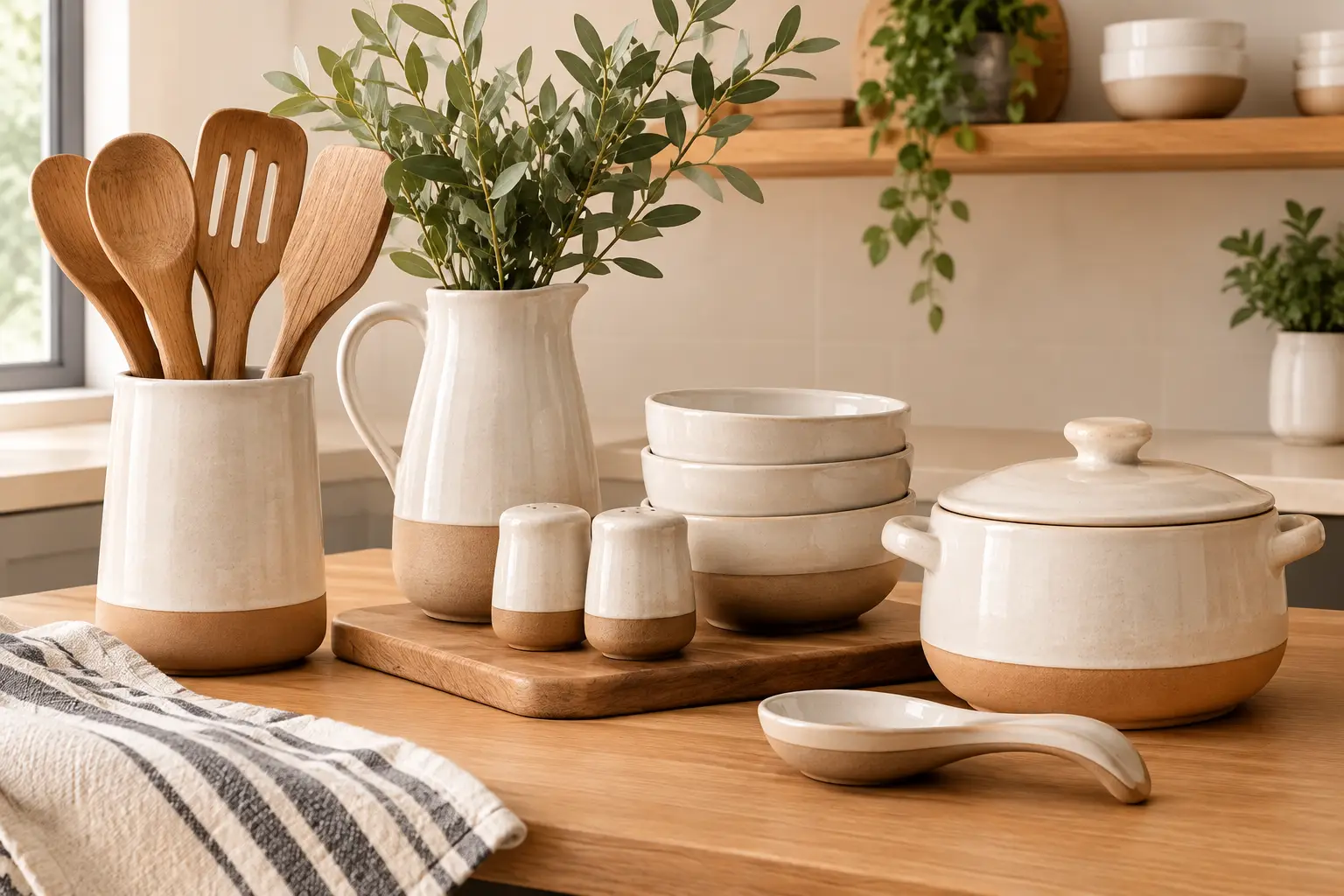
A wooden spoon dripping tomato sauce has to land somewhere. A tea bag needs a resting place. The garlic skins, measuring spoons, and little bits of daily kitchen life all need a home, too. The best ceramic kitchen accessories solve these small practical problems while making the room feel more like yours – colorful, collected, and pleasantly lived in.
Ceramics are especially lovely in a kitchen because they earn their place. A hand-finished spoon rest is not just something to admire on a shelf. It catches the mess from stirring supper. A small dish can hold a lemon wedge, a used tea bag, or a pinch of flaky salt. When those useful objects carry a leaf shape, a coastal color, or a touch of playful character, routine cooking feels a little less routine.
What Makes Ceramic Accessories Worth Choosing?
Factory-made kitchen accessories can be perfectly functional, but they often disappear into the background. Handmade ceramics tend to do the opposite. The gentle variation in glaze, the curve of a rim, and the small evidence of hand-finishing give each piece a presence that feels personal without asking for attention.
That individuality comes from the studio process. A ceramic piece may begin as a slip-cast form, then be cleaned, refined, glazed, and kiln fired before it is ready for a kitchen counter. Each stage affects the finished object. Glaze may pool more deeply in a recessed leaf vein, or a softly speckled surface may appear differently from one firing to the next. Those are not flaws to hide. They are part of the character that makes handmade work feel alive.
Ceramic also has a satisfying everyday weight. It stays put when you set down a spoon, and its nonporous glazed surface is easy to wipe after normal kitchen use. That said, practical expectations matter. Check a maker’s care guidance for food use, microwave use, dishwasher use, and heat resistance rather than assuming every ceramic item is suited to every task. A delicate decorative piece and a sturdy serving dish deserve different treatment.
Best Ceramic Kitchen Accessories to Use Every Day
Spoon rests that keep the counter tidy
A spoon rest is one of the smallest upgrades a cook can make. Instead of balancing a spoon on a pot lid or leaving a sticky line across the stovetop, you have a dedicated place for it between stirs. It is modest, useful, and visible – exactly the kind of object where a handmade glaze or nature-inspired shape can add daily pleasure.
Look for a rest with a shallow bowl or raised edges so drips stay contained. Size matters, too. A piece that works beautifully for a teaspoon may not comfortably hold a large ladle or silicone spatula. For a frequently used cooktop, choose a form with enough room for the utensils you actually reach for during cooking.
A leaf-shaped spoon rest brings a garden note to a neutral kitchen. A glossy blue glaze can feel coastal beside white tile. Earthy greens and warm browns suit a kitchen filled with wood cutting boards, stoneware mugs, and plants on the windowsill. There is no need to match everything exactly. A little contrast often makes a counter feel collected rather than staged.
Small dishes for the in-between tasks
The most helpful kitchen dish is often not the dinner plate. It is the little catchall that appears wherever a task needs one. Use a small ceramic dish for loose tea leaves, a garlic clove waiting to be chopped, a used lemon half, or a spoonful of spices measured before the pan gets hot.
These dishes are also wonderful near a coffee station. They can hold a used espresso spoon, wrapped sweetener packets, or a few cookies beside a cup. Near the sink, one can keep rings dry while washing dishes. The same piece can move from kitchen helper to trinket dish without looking out of place.
Choose shapes with a clear purpose. A shallow leaf dish is especially good for small ingredients or jewelry. A deeper dish offers more security for sauces, olives, or snack-sized portions. If the piece is intended for food, confirm that it has a food-safe glaze and follow the maker’s use instructions.
Salt cellars and pinch bowls for cooks who season by feel
Cooks who reach for salt with their fingers know the appeal of a small open bowl beside the stove. A ceramic pinch bowl keeps finishing salt, pepper, dried herbs, or spice blends close at hand. It is quicker than opening a cupboard, and it turns the act of seasoning into a small, tactile ritual.
A lidded salt cellar is useful if your kitchen is humid or you prefer to protect salt from cooking splatters. An open pinch bowl is simpler for immediate access. The best choice depends on how you cook and where the piece will sit. If it lives directly beside a busy range, a lid may be worth having. If it belongs on a dining table, a tiny open bowl feels inviting and easy to pass.
Serving pieces that do more than serve
A small ceramic serving dish can make ordinary snacks feel intentional. Use one for citrus wedges at taco night, pecans beside a cheese board, berries at breakfast, or a homemade dip at a casual gathering. It is a simple way to bring a handmade detail to the table without needing a matching set of formal dinnerware.
This is where whimsical shapes can shine. A nature-inspired dish adds charm to a spring brunch. A coastal piece feels right with shrimp, crackers, and a cold drink. For someone who loves an eclectic home, a small fantasy accent can be the conversation starter tucked among more traditional serving pieces. The trick is to use decorative ceramics rather than saving them forever. A piece with a job becomes part of the memory of a meal.
How to Choose the Best Ceramic Kitchen Accessories for Your Space
Start with the kitchen habit you want to make easier. If you cook most nights, a spoon rest and pinch bowl will likely get more use than a purely decorative dish. If you love hosting, small serving pieces may be the better place to begin. If your kitchen is compact, select one or two hardworking items instead of crowding the counter.
Then consider the visual mood already in the room. Bright glazes can wake up white cabinets and stainless steel. Muted greens, creams, and sandy tones blend naturally with farmhouse, cottage, and plant-filled spaces. A whimsical animal or leaf motif can soften a very modern kitchen, while a clean, simple silhouette can keep a maximalist room from feeling too busy.
Scale is often overlooked. A tiny dish can be charming but frustrating if it cannot hold the utensil or ingredient you intended. Before choosing, think about the diameter of your favorite cooking spoon, the size of your counter, and whether the item needs to fit on a tray or coffee bar. A handmade piece does not have to be large to make an impact, but it should fit the job.
Finally, give yourself permission to mix. Kitchen ceramics do not need to come as a matched collection. A glossy blue spoon rest can sit beside a soft green salt bowl and a cream-colored leaf dish if the pieces share a handmade warmth. Those thoughtful differences are what make a space feel gathered over time.
A Gift That Feels Useful and Personal
Ceramic kitchen accessories are especially good gifts because they avoid the usual choice between practical and meaningful. A spoon rest suits a new homeowner, a favorite home cook, or someone setting up a first apartment. A small dish makes a thoughtful host gift, housewarming addition, or birthday surprise for the person who already has plenty of mugs.
For a gardener or plant lover, leaf and nature motifs connect the kitchen to the rest of their home. For a collector of dragons, animals, gnomes, or imaginative art, a functional ceramic can be a gentle entry point into a more whimsical decorating style. The best gift choice is not always the most elaborate piece. It is the one that says, “I noticed what makes your home feel like you.”
Caring for Handmade Kitchen Ceramics
Handmade ceramics are meant to be enjoyed, but a little care protects the finish. Wipe up strong stains promptly, avoid sudden extreme temperature changes, and do not treat a decorative piece as ovenware unless the maker specifically says it is oven-safe. For everyday cleaning, a soft sponge and mild soap are usually kinder than abrasive scrubbers.
If a piece has an unglazed base, let it dry fully after washing before placing it on wood or other moisture-sensitive surfaces. And if you notice a small variation in glaze, shape, or color, remember that this is the signature of the human process behind the piece, not a reason to keep it hidden away.
About the Artist
Billy Williams is the artist behind Billy’s Creations TX, where he creates handcrafted ceramics, bonsai pots, wildlife photography, and other original artwork. His work brings together useful forms, natural details, and a little imaginative mischief from the Texas studio.
Choose the ceramic piece you will reach for on an ordinary Tuesday. That is the one that will quietly make your kitchen warmer, one stir, sprinkle, and shared snack at a time.