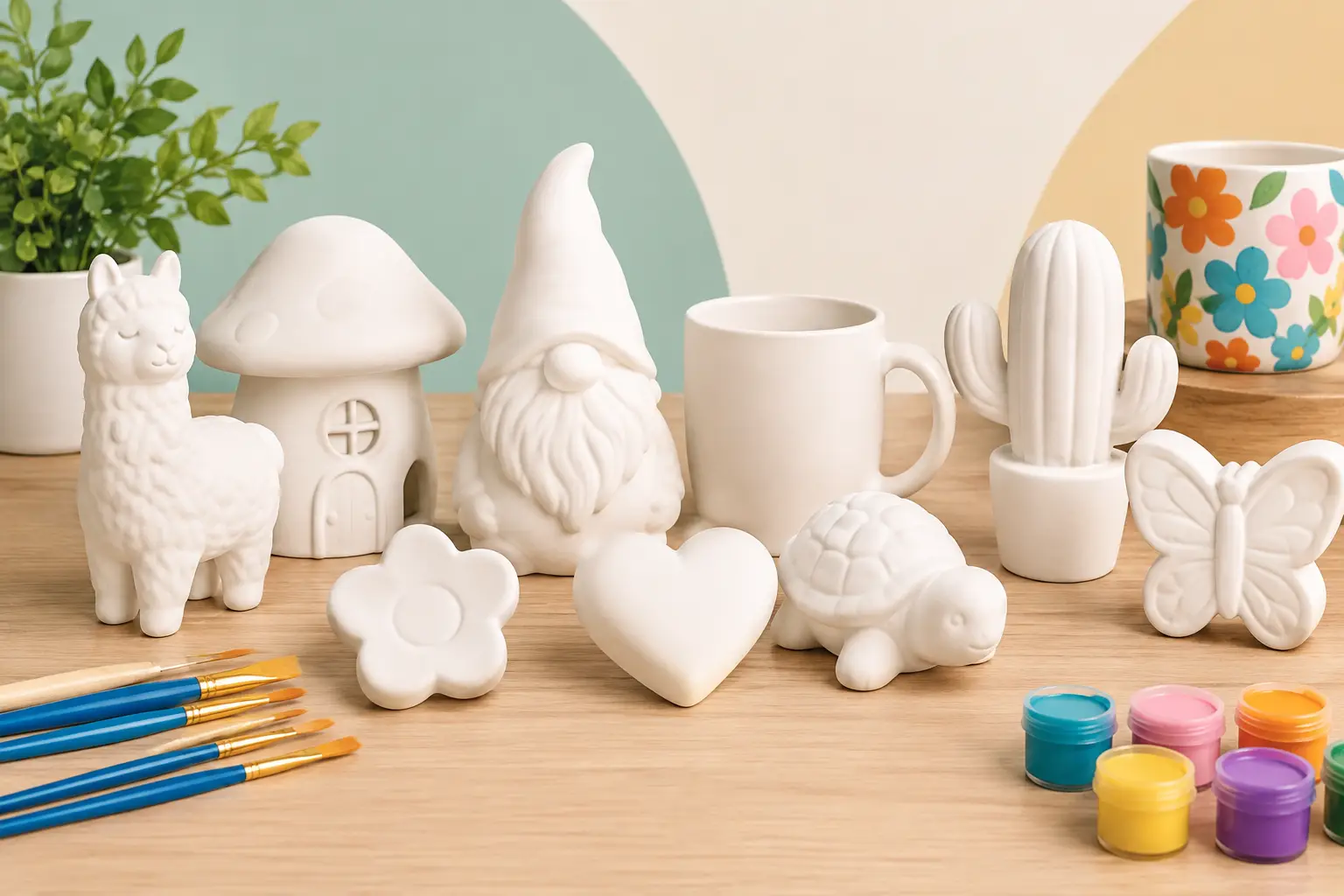
A plain ceramic dragon, tiny trinket dish, or cheerful gnome has a special kind of promise: it is not finished until you make it yours. Bisque blanks turn a handcrafted ceramic form into a hands-on creative project, whether you are planning a rainy-day family activity, painting a thoughtful gift, or adding a one-of-a-kind accent to a shelf.
Unlike a flat canvas, ceramic bisque has curves, texture, little details, and a satisfying weight in the hand. A dragon’s scales can become forest green, sunset copper, or bubblegum pink. A simple leaf dish can echo the colors in your garden. There is no single correct result, which is exactly what makes painting ceramic pieces so much fun.
What Are Bisque Blanks?
Bisque is clay that has been shaped, dried, and fired once in a kiln. That first firing transforms fragile greenware into a hard ceramic surface while leaving it porous enough to accept paint, glaze, and other finishes. A bisque blank is the ready-to-decorate version of that fired piece.
Before a piece reaches this stage, there is plenty of studio work behind it. Clay slip is poured into a mold, allowed to form its walls, and carefully removed. After drying, seams and rough spots are cleaned by hand. The piece is then kiln fired, creating the pale, unglazed surface crafters recognize as bisque. Small variations are part of the charm of hand-finished ceramics. They are signs that a real person prepared the piece rather than a factory line stamping out identical decor.
Bisque is firm, but it is still ceramic. Treat it with care before and after painting. It can chip if dropped, and fine features such as ears, wings, tails, and castle turrets deserve a gentle touch.
Choose a Piece With a Story Built In
The best blank is not always the largest or most detailed one. It is the piece that makes someone immediately imagine color. For a beginner, a spoon rest, small dish, or friendly animal offers broad, easy surfaces and a quick win. For a painter who enjoys fine detail, fantasy figurines, textured dragons, woodland creatures, and miniature castles offer plenty of places to add shading, symbols, and tiny surprises.
Think about where the finished piece will live. A trinket dish can hold rings by the sink or keys near the door. A painted gnome makes a playful garden-room companion. A small planter or bonsai pot can become part of a plant lover’s daily ritual, though its intended use should guide your choice of finish. Decorative pieces invite more experimentation, while items meant for food, frequent washing, or growing plants may need kiln-fired glazes and more specialized care.
A blank can also make a memorable gathering activity. Give every guest the same animal shape and watch how differently it comes to life. One person may create a realistic fox, another may paint polka dots, and someone else may decide it needs a tiny gold crown. The shared starting point makes the individual results even more delightful.
How to Paint Bisque Blanks at Home
Start with a clean, dry piece. A soft brush or dry cloth is usually enough to remove dust. Avoid soaking unfinished bisque in water because its porous surface can absorb moisture. Set the piece on a protected table, gather a few brushes, and make room for it to dry between layers.
For a simple decorative project, acrylic craft paint is approachable, widely available, and easy to use. Use thin coats instead of one heavy layer. The first coat may look streaky, especially on large smooth areas, but a second or third light coat builds much richer color without hiding the sculpted details. Let each layer dry before adding the next.
Acrylic paint is especially friendly for dry indoor display pieces. It allows bright color, crisp details, and a little creative freedom with no need for another kiln firing. You can sketch ideas lightly with a pencil first, but do not worry if the plan changes. Sometimes the most charming detail appears when a brush slips into a new direction.
If you have access to a pottery studio and want a traditional glazed finish, choose ceramic glazes made for bisque and follow the product’s firing instructions closely. Glazes need a second kiln firing to mature. They can shift in color, become glossy, or reveal unexpected depth after firing, which is part science and part studio magic.
Build Color From the Background Forward
Paint large areas first, then return for smaller details. On a dragon, that might mean applying the body color before working on scales, claws, eyes, and horns. On a dish, paint the center before tracing the rim. This method gives your hand a place to rest and helps keep colors clean.
For a more dimensional look, use a slightly darker version of your base color in recessed lines and a lighter shade on raised edges. You do not need advanced painting skills for this. A small amount of paint on a nearly dry brush can softly catch raised texture and make scales, fur, leaves, or brickwork stand out.
Sealing and Caring for Your Painted Ceramic
Once acrylic paint is completely dry, a clear sealant can help protect a decorative piece from dust, light handling, and minor scuffs. Choose a finish that matches the look you want. Matte keeps the surface soft and earthy, satin gives it a gentle glow, and gloss adds a glassier shine. Apply light, even coats in a ventilated area and let the piece cure fully before displaying it.
A sealant is not the same as a fired glaze. Hand-painted acrylic bisque should generally be treated as decorative art, not as dinnerware. It should not go in the dishwasher, microwave, or oven. It is also wise to keep it away from prolonged outdoor weather and standing water. If you want a bowl, mug, planter, or kitchen item to be food-safe or regularly washable, use materials and firing methods rated for that purpose.
That distinction is not a limitation. It simply helps each piece have the life it was made for. A painted collectible on a bookshelf needs different care than a glazed spoon rest beside the stove.
Ideas That Make a Blank Feel Personal
A favorite color is a fine place to begin, but personal touches make the finished ceramic feel like it belongs to someone. Add a name or date to the underside of a small dish. Paint a pet’s markings onto an animal figurine. Turn a castle into a tiny winter scene or a coastal hideaway. Use a limited palette drawn from a room’s throw pillows, artwork, or houseplants so the piece feels at home from the start.
For gifts, consider the recipient’s small joys. A gardener may love a ladybug-adorned planter accent. A fantasy reader might treasure a midnight-blue dragon with silver stars. A child may be proud of a colorful dinosaur painted with their own hands. These are the objects people keep because they remember making them, receiving them, or seeing a little bit of themselves in the finished design.
About the Artist
Billy Williams is the artist behind Billy’s Creations TX, where he creates handcrafted ceramics, bonsai pots, wildlife photography, and other original artwork. His work brings together useful pottery, imaginative figures, and the patient studio process of cleaning, finishing, glazing, and kiln firing each piece.
Set out your paints, choose the piece that makes you smile, and let the ceramic lead the way. A bisque blank begins as a quiet little object, but with color and imagination, it can become a keepsake with a story all its own.