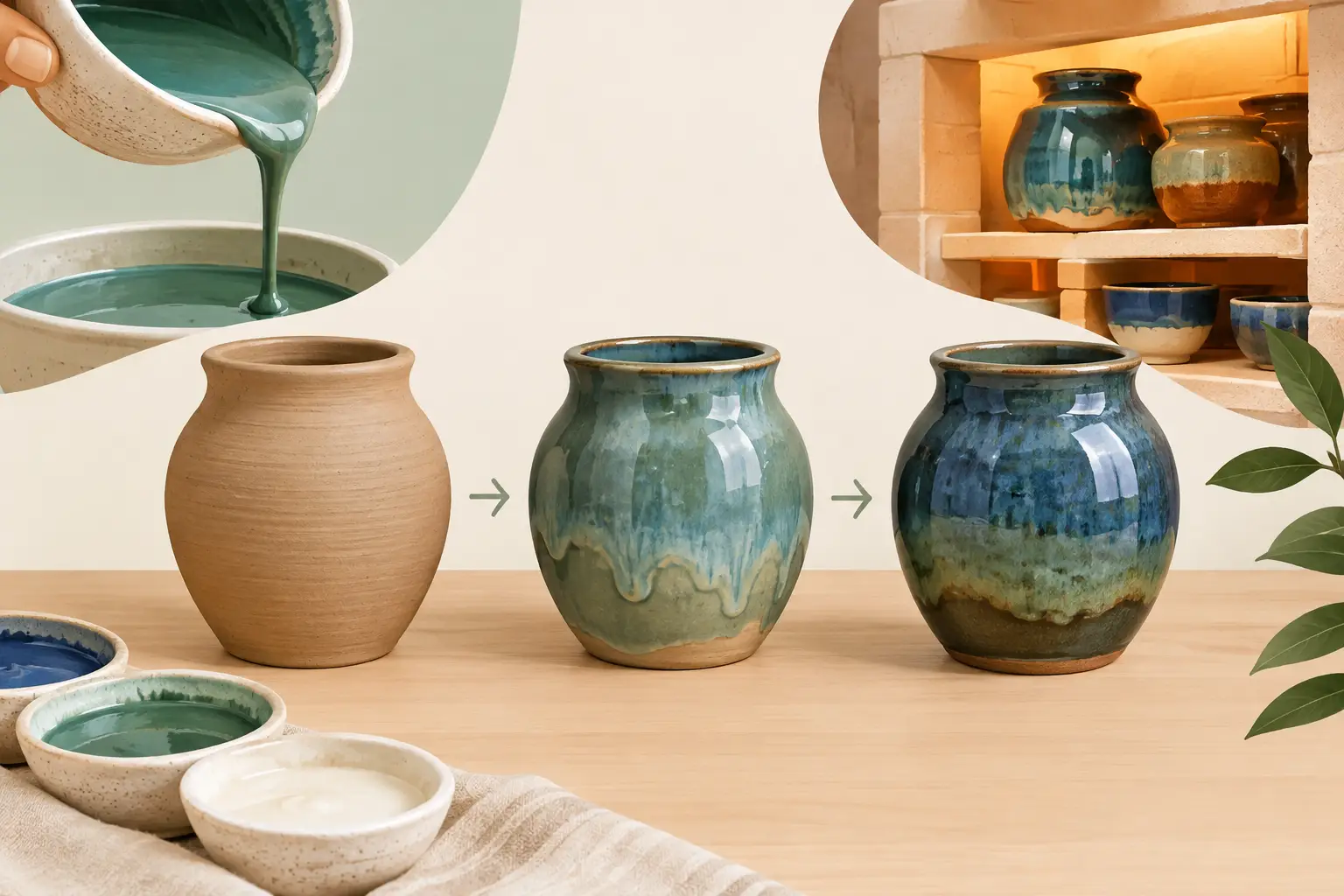
A glossy blue bonsai pot, a speckled spoon rest, or a dragon with a smoky green finish may look magically transformed after firing. But how does ceramic glazing work? The short answer is that a powdered mineral coating melts in a hot kiln, then cools into a thin layer of glass bonded to the clay underneath. The longer answer is where all the color, texture, surprises, and studio patience live.
For handmade pottery, glaze is not merely decoration. It can make a planter easier to wipe clean, give a trinket dish its jewel-like shine, add depth to a leaf dish, or bring tiny scales and facial details to life on a whimsical figurine. It also has its own personality. A glaze can flow, break over texture, pool in a recessed area, or shift in color depending on the clay body and firing conditions.
What Ceramic Glaze Is Made Of
Ceramic glaze begins as a carefully balanced blend of powdered materials, usually mixed with water until it has a smooth, brushable or dippable consistency. While recipes vary widely, most glazes contain silica, fluxes, and stabilizers.
Silica is the glass-forming ingredient. Left on its own, it needs extremely high heat to melt. Fluxes help lower that melting temperature so the glaze can mature in a ceramic kiln. Stabilizers, often alumina supplied through clay or feldspar, help keep the melted glaze from running right off the piece like syrup.
Color comes from mineral oxides and stains. Iron can create warm browns, earthy reds, or soft greens. Copper may produce greens or turquoise tones. Cobalt is famous for strong blues, while commercial ceramic stains allow makers to reach a broad palette with more predictability. Even then, the kiln gets a vote. The same glaze may look a little different on white clay than it does on a warm buff or red clay body.
How Does Ceramic Glazing Work From Bisque to Finish?
Before glazing begins, a ceramic piece is generally fired once without glaze. This first firing is called a bisque firing. It changes fragile, dry clay into hard but still porous ceramic material. A bisque-fired castle, animal, planter, or ready-to-paint blank is sturdy enough to handle, yet thirsty enough to accept glaze.
That porosity matters. When glaze is brushed, poured, dipped, or sprayed onto bisque, some of the water absorbs into the clay. The mineral particles remain on the surface in a powdery coating. Once dry, the piece may look dull and chalky, nothing like the bright finished color shown on a glazed pot or figurine.
The magic happens during the glaze firing. As kiln temperatures climb, the glaze materials heat up, react, and begin to melt together. At the glaze’s intended maturity temperature, they form a glassy surface that fuses to the clay. After a slow enough cooling period, that liquid glass hardens into the finished coating.
A glaze firing is not a paint-drying step. It is a permanent transformation. That is why a finished ceramic piece carries a different kind of presence than an item with a surface coating applied after production. The color and glassy finish have been fired onto the object itself.
The kiln is part of the creative process
Kilns are wonderfully precise tools, but they do not produce identical results in every spot or every firing. Heatwork, or the combination of temperature and time, affects how fully a glaze melts. The position of an item in the kiln can make a subtle difference too. A little more heat may make a glaze glossier or allow it to flow farther into carved details.
Firing atmosphere also changes certain glazes. Most small electric kilns use oxidation firing, where oxygen is present. Gas kilns can be fired in reduction, where oxygen is limited, producing different results from the same minerals. A copper glaze, for example, may behave very differently in those two environments.
For an artisan studio, these variables are part science, part experience, and part happy surprise. Test tiles, careful notes, and repeat firings help a maker learn how a particular glaze behaves on a particular clay. Handmade work benefits from that attention, but it also keeps a little room for individuality.
Why Glaze Can Look Different Than Expected
A glaze swatch is a helpful starting point, not a guarantee. Thickness is one of the biggest reasons for variation. A thin application may look lighter, more transparent, or more matte. A thicker application can deepen the color, become glossier, or pool in crevices. Too much glaze can run during firing and stick a piece to the kiln shelf, which is every potter’s version of an unwanted plot twist.
Texture changes the result as well. On a smooth jewelry dish, glaze may appear even and reflective. On a dragon’s scales, a leafy rim, or the stones of a tiny castle, it may gather in low areas and become thinner over raised edges. Many potters use this quality intentionally because it gives sculptural work more depth.
Clay color matters, too. A clear glaze over white clay may look clean and bright, while that same clear glaze over darker clay can appear warmer or more muted. Transparent glazes reveal the clay beneath them. Opaque glazes cover it more completely, although they can still shift based on firing temperature and thickness.
Glossy, Matte, Clear, and Textured Glazes
The finish of a glaze affects both the look and the practical use of a ceramic piece. Glossy glazes reflect light and often make colors feel rich and saturated. They work beautifully on small decorative dishes, colorful planters, and fantasy pieces that need a touch of shimmer.
Matte glazes have a softer, velvety appearance. They can make a woodland gnome, coastal shell form, or nature-inspired planter feel more earthy and quiet. However, some matte surfaces can show marks more easily than a glossy finish, especially on frequently handled functional pieces.
Clear glaze is often used over underglaze decoration. Underglaze is a colored ceramic material applied before the final firing. It lets a maker paint small details, such as an animal’s markings or a scene on a dish, then protect that artwork under a transparent glassy layer.
Specialty glazes add even more character. Speckled glazes can resemble stone or sand. Crystalline or reactive finishes may create bursts of color. Textured glazes can emphasize sculpted detail, but they are best chosen with the object’s purpose in mind. A deeply textured finish may be perfect for a display dragon but less practical inside a dish meant for easy cleaning.
Glaze and Function: What Makes a Piece Practical?
Glaze often helps functional pottery resist moisture and makes its surface easier to clean. For plantware, a glazed exterior can bring color and protection to a bonsai pot or planter, while drainage holes remain essential for many plants. Whether the inside is glazed, the type of clay, and the intended use all affect how a planter performs.
For kitchen accessories and food-contact pieces, the glaze and clay must be fired to the correct maturity and made with materials suitable for that use. A properly fired, food-safe glaze is only one part of the equation. The form matters, too. A spoon rest has different needs than a decorative wall piece, and a highly textured sculpture is not automatically intended for food service.
Hand washing is often the gentlest choice for handmade ceramic art, especially pieces with delicate sculptural details, metallic accents, or elaborate forms. Thermal shock is another concern. Avoid moving a ceramic item directly from a very cold environment into a very hot one, or vice versa. Even a well-fired piece appreciates a little kindness.
Why Handmade Glazing Has So Much Character
Factory-made items are designed for exact repetition. In a small studio, glazing is more tactile. Each piece is cleaned, inspected, handled, coated, and loaded into the kiln with care. A maker notices where glaze settles around a carved wing, how it catches on a leaf edge, or where a pot’s shape calls for a contrasting interior color.
That does not mean every handmade item is unpredictable. It means the finished surface carries evidence of real materials and real hands. Tiny variations in speckles, shading, and flow are often part of what makes a handmade planter, dish, or collectible feel like it belongs in a home rather than on an anonymous warehouse shelf.
About the Artist
Billy Williams is the artist behind Billy’s Creations TX, where he creates handcrafted ceramics, bonsai pots, wildlife photography, and other original artwork. To see more of his work or browse available pieces, visit Billy’s Creations TX on Etsy.
The next time a glazed ceramic catches your eye, look closely at the places where color gathers, breaks, and glows. Those small kiln-fired details are often the place where a useful object becomes a little piece of studio magic.