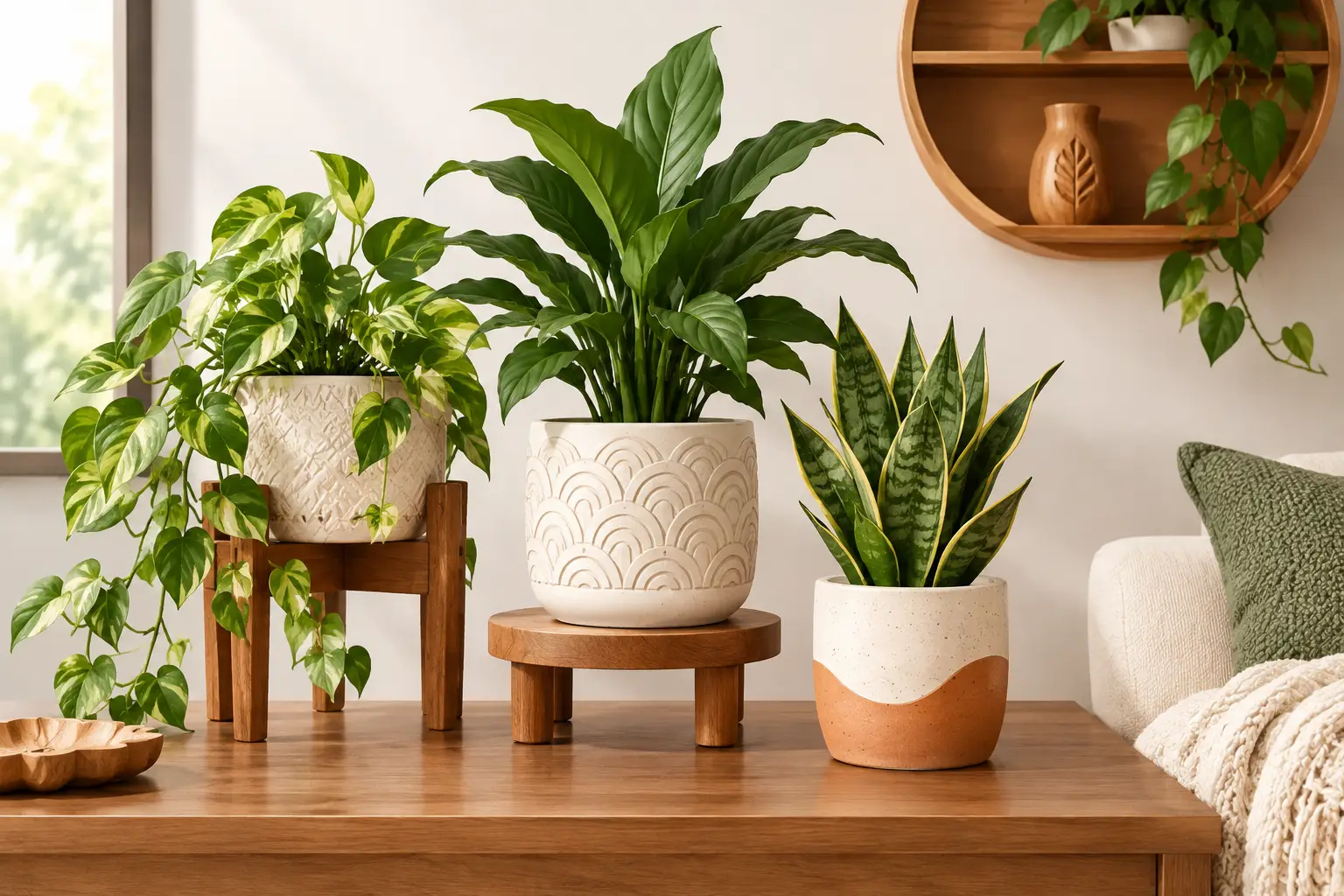
A favorite plant deserves more than a spot on the windowsill beside a forgotten mail pile. This indoor plant display guide is about giving your greenery a real little world to live in: a place where leaves catch the light, handmade pottery adds texture, and a tiny dragon, animal, or leaf dish can make the arrangement feel wonderfully your own.
The nicest displays do not look assembled in one afternoon from a matching set. They look collected over time. A trailing pothos, a compact bonsai, a glazed ceramic planter, and a useful trinket dish can share a surface without competing when each piece has room to be seen.
Start Your Indoor Plant Display With the Light
Before choosing a pot or styling a shelf, notice what the room already offers. Light determines where the plants can thrive, and thriving plants always look better than plants chosen only for their color or shape.
A bright south- or west-facing window can support sun-loving succulents, many cacti, jade plants, and some bonsai species, depending on the season and the window’s intensity. East-facing windows often provide gentler morning light that works beautifully for many common houseplants. In lower-light corners, choose plants that tolerate shade rather than trying to force a sun-hungry plant to behave.
Look at the light across an entire day. A shelf three feet from a window may be much dimmer than it seems at noon. Sheer curtains soften harsh rays, while nearby buildings and mature trees can change the conditions from one side of a room to the other. If a plant needs to sit farther from a window for the look you want, a small grow light may be the practical answer.
Build Height, Not a Straight Line
A display becomes more inviting when the eye can travel up, down, and around it. Three plants in identical pots lined shoulder to shoulder may be tidy, but they can also feel a little flat. Varying the height of plants and vessels creates the sense of a tiny indoor landscape.
Begin with one taller anchor. This could be a snake plant, a small indoor tree, a pothos climbing a support, or a carefully trained bonsai on a console table. Add a middle layer using a tabletop planter or plant stand, then bring in a low piece such as a small succulent, a mossy starter plant, or a shallow dish garden.
A stack of art books, a sturdy wood riser, or a small stool can raise a plant without asking every pot to be tall. Keep the base stable and protect furniture from moisture. The goal is not to create a pyramid. It is to let each plant show off its own silhouette.
On a shelf, try placing the tallest item near one end rather than dead center. A trailing plant can then soften the opposite side, with a smaller rounded pot or ceramic figure filling the visual pause between them. This loose balance feels more natural than perfect symmetry.
Give Each Plant a Different Job
Think of foliage as part of the decorating palette. Upright leaves bring structure. Round leaves feel soft and friendly. Fine fronds add movement. Trailing vines connect levels and can make a bookcase or plant stand feel less boxy.
A single display often needs only three plant personalities: one tall and architectural, one full or rounded, and one that spills or reaches outward. More can be lovely, but crowding too many plants together reduces air circulation and makes watering harder. It also hides the handmade details that make the display personal.
Choose Pots That Add Character and Function
Ceramic planters are not merely containers. They are the visual foundation of the display, especially in winter or in rooms where a plant’s foliage is mostly green. A hand-finished pot has small variations in glaze, texture, and form that help a plant arrangement feel warm rather than showroom-perfect.
Choose the pot’s scale before choosing its color. A pot that is too large holds excess wet soil around a small root system. A pot that is too small dries quickly and can make a growing plant unstable. For many houseplants, moving up only one pot size at a time is a sensible approach. Bonsai is its own careful practice, where pot depth, root work, species, and tree style all matter.
Drainage matters as much as appearance. A planter with a drainage hole lets excess water escape, which is especially useful for beginners and for plants that dislike staying wet. Place a saucer beneath it, or use the ceramic piece as a cachepot with a plain nursery pot tucked inside. If you use a pot without drainage, water lightly and deliberately. Decorative gravel at the bottom is not a substitute for a drainage hole because water can still collect around roots.
Color can guide the mood. Earthy clay tones, mossy greens, ocean blues, and soft cream glazes make foliage feel at home. A dark glazed bonsai pot can give a miniature tree a grounded, traditional presence. A cheerful handmade planter, on the other hand, can become the bright surprise on a kitchen shelf or desk.
There is no rule that every pot must match. Related colors or repeated materials are enough. A blue-green glaze, a natural wood shelf, and a small leaf-shaped dish may feel cohesive even when every piece has a different shape.
Add Whimsy Without Turning It Into Clutter
The most memorable plant displays have a point of view. Perhaps your home leans coastal, with sea-inspired blues and nature prints. Perhaps it is a little enchanted, with a dragon keeping watch beside a fern or a gnome tucked among trailing leaves. These touches work best when they feel discovered rather than scattered everywhere.
Choose one or two decorative companions for a plant grouping. A small ceramic animal can face outward from a shelf edge. A tiny castle can sit behind a low-growing plant and peek through the leaves. A leaf dish can hold plant clips, a moisture meter, or a few polished stones instead of becoming another random surface for clutter.
Scale is the secret. A figurine should not disappear behind a large pot, and it should not be so tall that it competes with the plant as the main event. Leave a little breathing room around it. The empty space is part of the display.
Use Surfaces That Make Care Easy
A beautiful arrangement fails quickly if watering it becomes a nuisance. Group plants that have similar light and watering needs where possible, especially on high shelves or in a busy entryway. Keep a saucer, tray, or waterproof liner under pots that may drip. Ceramic trays and dishes are especially useful for gathering small items that otherwise wander around a plant station.
For a windowsill, keep the arrangement simple enough that you can rotate plants, wipe the glass, and check leaves for pests. For a coffee table, choose compact plants and low vessels so guests can still see one another. For a bathroom, make sure the plant actually suits the available light rather than assuming humidity alone will keep it happy.
A dedicated plant corner can handle a more layered look. Use a narrow shelf, bench, or tiered stand to hold several plants while keeping pathways clear. This is a wonderful place for a small collection of handmade planters because the differences in glaze and shape become part of the story.
Refresh the Display as Plants Change
Plants are living décor, which means the display is never truly finished. Turn pots occasionally so growth stays even. Trim yellowing leaves. Rinse dust from broad foliage. Move a plant up a stand when it gets taller, or shift a trailing vine to a spot where it can drape freely.
Seasonal changes are a good reason to edit. In summer, you may pull plants back from blazing glass or increase watering checks. In winter, move light-loving plants closer to windows and keep leaves away from cold drafts. A few small adjustments keep the arrangement looking intentional without requiring a complete redesign.
Handmade ceramics also deserve everyday care. Wipe spills promptly, use felt pads or a tray beneath pieces on delicate furniture, and handle glazed surfaces thoughtfully when moving pots. The small marks of hand-finishing, the gentle variations in glaze, and the evidence of kiln-fired work are part of what makes each piece feel special.
About the Artist
Billy Williams is the artist behind Billy’s Creations TX, where he creates handcrafted ceramics, bonsai pots, wildlife photography, and other original artwork. His work is made for plant lovers, collectors, decorators, and anyone who enjoys a little more personality in the objects they bring home.
Let your display grow slowly. A well-loved plant, a useful handmade pot, and one delightfully unexpected ceramic companion can make an ordinary corner feel like a place worth pausing beside.