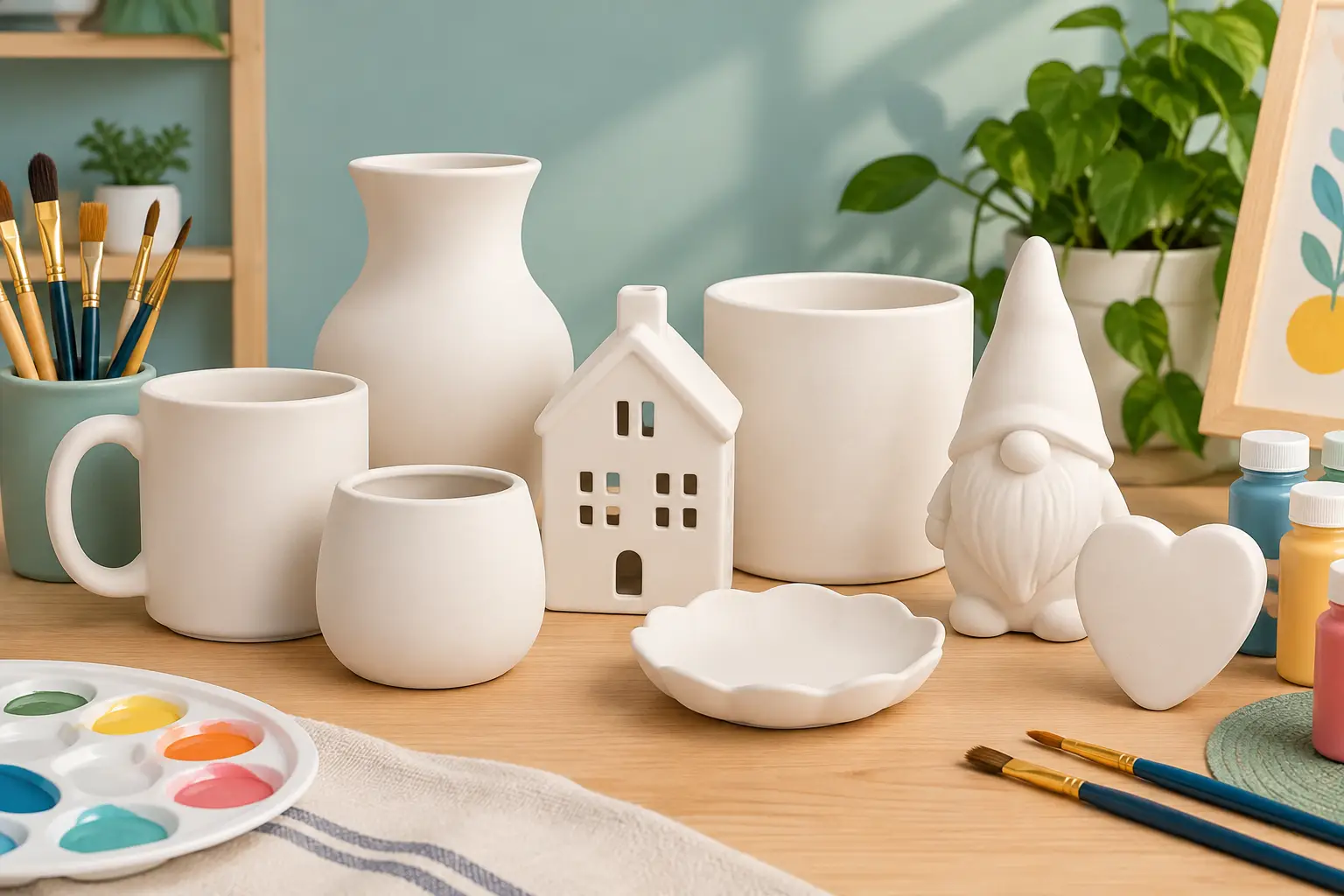
A good pottery blank has a quiet kind of promise. Before the color, before the glossy glaze, before it finds a sunny shelf or becomes a gift, it is simply a ceramic form waiting for someone’s idea. This pottery blanks review looks at what makes ready-to-paint bisque enjoyable to work with, what details are worth checking before you buy, and why handmade blanks can make a more memorable project than a generic craft-store surface.
For painters, families, collectors, and anyone who likes a little clay dust under their fingernails, bisque offers something wonderfully direct: a real ceramic object that can become whatever you imagine. A dragon can wear mossy greens or midnight blues. A leaf dish can become a soft coastal watercolor. A small planter can turn into a cheerful home for a succulent or bonsai starter.
What Are Pottery Blanks, Exactly?
Pottery blanks are unfinished ceramic pieces, usually made from clay or slip-cast ceramic material, cleaned and fired once to become bisque. That first firing makes the piece firm enough to handle and paint while leaving a porous surface that readily accepts many ceramic decorating materials.
The word “blank” can make these pieces sound plain, but that is part of their charm. A blank is not an incomplete finished product. It is a starting point. Its sculpted lines, raised texture, and useful shape provide the structure, while the painter supplies the personality.
At BillysCreationsTx, the appeal is especially strong in whimsical forms: little animals, fantasy creatures, castles, gnomes, decorative dishes, and plant-friendly pieces. These are not flat plaques that need a design invented from scratch. Their ears, scales, leaves, windows, paws, and tiny expressions give painters something to respond to right away.
Pottery Blanks Review: What Makes a Good One?
The best bisque blanks feel intentional before a brush ever touches them. Look first at the form. A well-made piece should have clear details that are neither so shallow they disappear under paint nor so sharp they are difficult to color evenly. On a dragon, for example, you want defined scales and facial features. On a spoon rest or trinket dish, you want a smooth, practical surface that will be pleasant to use and easy to wipe clean after finishing.
Hand-finishing matters here. Slip-casting creates a repeatable form, but cleaning seams, refining edges, smoothing rough spots, and checking small details all happen through careful studio work. That human attention is often what separates a charming ceramic blank from a piece that feels rushed or overly mechanical.
A quality blank should also sit level and feel substantial without being clunky. Turn it over and check the base. A clean, even bottom helps a dish rest nicely on a table and gives a planter a polished appearance once it is decorated. Small variations can happen with handmade ceramics, and that is not necessarily a flaw. A slightly individual contour is part of the character of a studio-made object. Deep cracks, loose pieces, or an unstable base are another matter and should be avoided.
The right choice also depends on your intended finish. If you plan to use acrylic paint and display the piece indoors, a highly detailed figurine can be a joy because every ridge and curl offers a new color opportunity. If you want a functional spoon rest, planter, or dish that may be exposed to water, food, or regular handling, ask whether the piece can be glazed and kiln fired after painting. Acrylic-painted ceramics are lovely for decorative use, but they do not offer the same durable, washable surface as properly fired glaze.
The Fun Is in Choosing a Shape With a Job
A blank with a purpose tends to get finished instead of sitting in a craft drawer. That does not mean every project must be practical. A tiny castle can simply make a bookcase more magical. Still, a useful object gives color choices a reason to exist.
A leaf dish can hold rings by the sink, keys near the door, or wrapped candies on a coffee table. A spoon rest can bring a small burst of handmade color to a kitchen that otherwise leans practical. A planter or bonsai pot invites an earthy palette that echoes the plant inside it: iron red, stone gray, fern green, sandy cream, or the deep blue of a rainy Texas sky.
Fantasy blanks are equally rewarding because they encourage play. Paint a dragon in natural reptile colors for a woodland shelf, or give it pearly wings and a bright violet belly for a child who loves make-believe. A gnome can be traditional, coastal, spooky, patriotic, or completely peculiar. There is no correct palette, which is one reason these forms work so well for group projects and gifts.
Paint, Glaze, and Finish: Know the Trade-Offs
Before you begin, decide whether your piece will be decorative or functional. This simple choice affects almost everything that follows.
Acrylic craft paint is approachable, widely available, and ideal for an at-home project. It works especially well for indoor figurines, ornaments, shelf sitters, and decorative dishes that will not be used with food. Thin coats preserve sculpted details better than one heavy coat. Let each layer dry, then add darker color into recesses or lighter highlights along raised areas. A clear protective sealer can help a display piece resist dust and gentle handling, though it does not make it food-safe or dishwasher-safe.
Underglazes and glazes open the door to a more traditional ceramic finish. They can create rich, lasting color, but they require an appropriate kiln firing and some knowledge of firing temperatures and glaze compatibility. A glossy glaze can pool in low areas, change color in the kiln, or soften tiny details if applied too heavily. That unpredictability is not always a problem. For many ceramic artists, it is part of the lovely surprise of opening a cooled kiln.
For a first project, choose a piece with an obvious focal point and a manageable number of details. A small animal, leaf dish, or simple planter is less intimidating than a highly textured castle with dozens of little windows. Save the elaborate dragon for the day you want to settle in with several colors, a favorite playlist, and no need to rush.
Simple Techniques That Let the Sculpture Shine
Ceramic blanks reward patience more than perfection. Start by wiping away dust with a dry, soft brush or cloth. Dust can make paint skip across the surface, especially in detailed areas. Then choose two or three main colors instead of trying to use every shade in the paint box.
For natural subjects, use a darker base color in crevices and brush a lighter shade across raised areas once the first coat is dry. This gives fur, feathers, leaves, scales, and stonework a sense of depth without requiring advanced painting skills. On a castle, a gray base with soft tan dry-brushing can make the walls look weathered. On a turtle or frog, a deeper green around the feet and underside makes the form feel more alive.
If you prefer a cleaner, graphic look, use solid color blocks. A white bunny with a pink nose, a navy-blue planter with a single gold rim, or a bright red mushroom house can be every bit as charming as a heavily shaded piece. The form already carries much of the story.
Give painted pieces enough drying time before sealing or handling. This is the least glamorous step, but rushing it can smudge a carefully painted face or leave cloudy patches beneath a finish. A small ceramic object can last for years when it is allowed to cure properly and used in a way that matches its finish.
Why Handmade Bisque Feels Different
Mass-produced craft surfaces have their place, especially for a large party or a quick classroom activity. Handmade pottery blanks offer something more personal: the feeling that an object passed through a real studio before it reached your table. The mold may create the beginning, but the cleaning, refining, firing, and final inspection give each piece its own small identity.
That distinction matters when the blank becomes a gift. A painted trinket dish for a friend, a whimsical planter for a new homeowner, or a dragon painted by a child for a grandparent carries two stories – the maker who formed the ceramic piece and the person who transformed it with color.
About the Artist
Billy Williams is the artist behind Billy’s Creations TX, where he creates handcrafted ceramics, bonsai pots, wildlife photography, and other original artwork. His work grows from a hands-on studio practice and a fondness for useful objects, natural forms, and a little well-placed whimsy.
Choose a pottery blank that makes you want to pick up a brush, not one that feels like homework. The best finished piece will not be the one with the most colors or the smoothest lines. It will be the one that makes you smile every time you pass it on the shelf, counter, or windowsill.