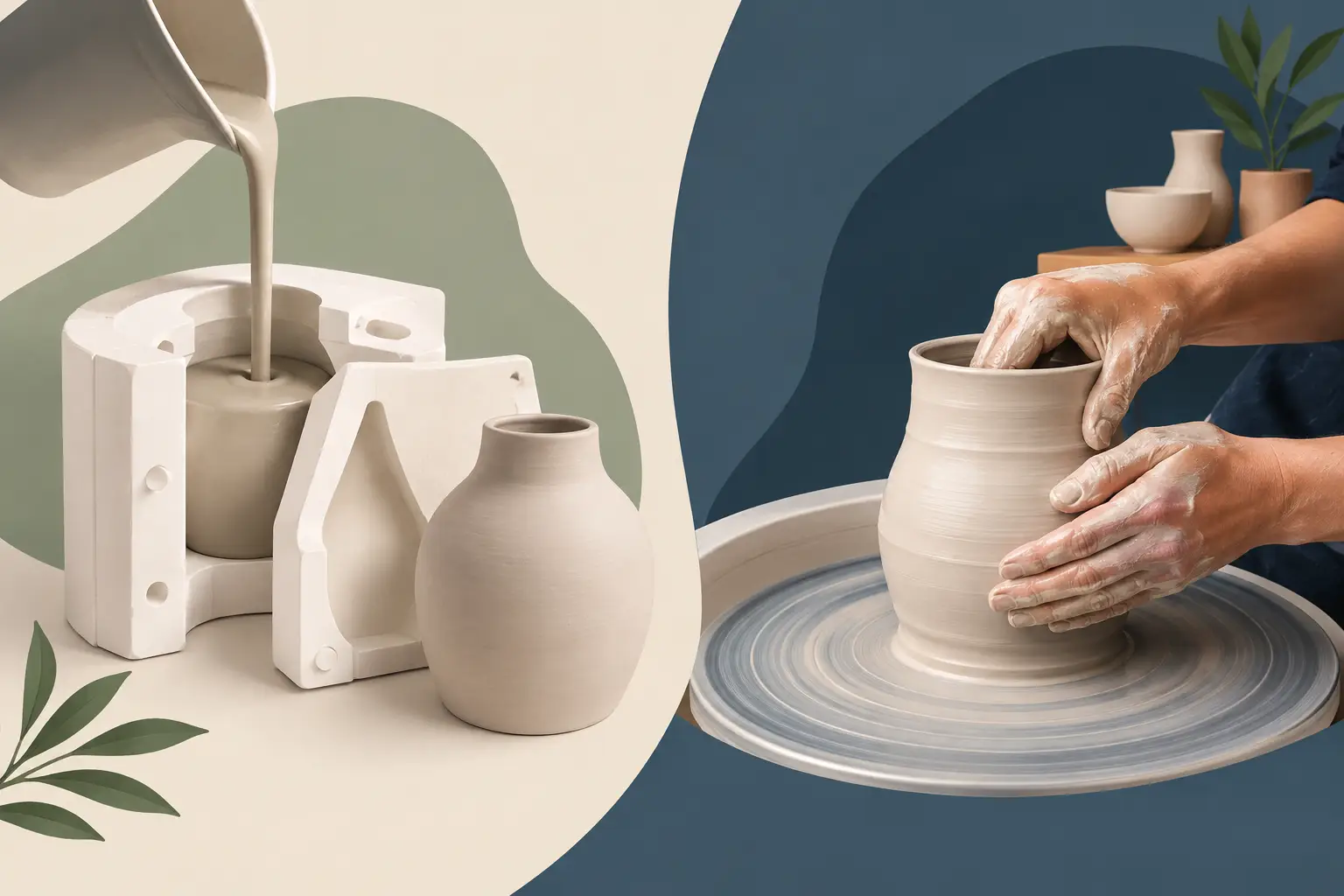
A tiny dragon with crisp scales, a bonsai pot with repeatable drainage details, and a loose, tall vase with throwing rings all begin with clay. Yet they call for very different studio approaches. Slip casting versus wheel throwing is not a contest between handmade and machine-made ceramics. It is a choice of process, and each process gives an object its own kind of character.
For collectors, plant lovers, and gift shoppers, understanding that difference makes it easier to choose pieces that fit the way they live, decorate, and create. For makers, it explains why a whimsical castle may start in a mold while a one-of-a-kind bowl begins spinning on a wheel.
What slip casting brings to the studio
Slip casting starts with liquid clay, called slip, and a plaster mold. The slip is poured into the mold, where the plaster draws out moisture. Clay gathers against the mold walls and gradually forms a shell. Once that shell reaches the right thickness, the remaining liquid slip is poured away. After the clay firms up, the mold opens and reveals the piece inside.
This method is especially suited to forms with fine detail or shapes that would be difficult to make on a wheel. Think of dragon wings, textured animal fur, tiny window openings in a miniature castle, or the curled edges of a leaf dish. A well-made mold can capture those details again and again, giving a collection visual consistency without making every finished piece feel identical.
The mold is only the beginning. Fresh castings have seam lines, soft edges, and occasional small imperfections that need patient attention. Each piece is cleaned, refined, and allowed to dry before bisque firing. Glaze adds another layer of personality, whether it is a glossy coastal blue, an earthy green for a planter, or a cheerful color that brings a gnome to life. Kiln firing transforms that careful work into durable ceramic.
Slip casting also makes practical sense for small decorative objects and useful wares that benefit from repeatable dimensions. A bonsai pot may need a reliably sized foot, a level rim, and a drainage hole positioned for healthy roots. A spoon rest should sit flat beside the stove. A trinket dish should have a pleasing curve that holds rings without taking over a nightstand. When a form works beautifully, casting allows a studio to revisit it while still hand-finishing each individual piece.
Wheel throwing and the beauty of the visible hand
Wheel throwing begins with a lump of workable clay placed in the center of a spinning wheel. The potter centers it, opens it, and pulls the walls upward using steady hands, water, pressure, and timing. A bowl, mug, planter, or vase takes shape in real time.
The process has a wonderfully direct feeling. The subtle rings left by a hand or trimming tool often remain visible in the finished surface. A wheel-thrown piece may be perfectly functional while still showing the gentle evidence of its making: a slightly fuller side, a soft shift in the rim, or a curve that could not be repeated exactly.
That individuality is a major reason people love thrown pottery. If you want a special serving bowl, a generous mug, or a tall vase whose proportions have been judged by eye as it rises from the wheel, throwing offers a warm, spontaneous quality. It can feel less like a reproduction of a planned form and more like a conversation between clay and maker.
Wheel throwing is not necessarily quicker, even though it can look effortless when done by an experienced potter. Each piece must be centered, thrown, dried to the right firmness, trimmed, possibly fitted with handles or attachments, dried again, bisque fired, glazed, and fired once more. Larger work also brings technical challenges. Thin walls can warp. Tall forms can slump. Wide plates can crack if they dry unevenly.
Slip casting versus wheel throwing: the real differences
The biggest difference is not whether one process is more artistic. Both demand practiced hands, materials knowledge, and a good eye. The difference lies in how the form is created and what it needs to do.
Slip casting is a strong choice when a design has sculptural detail, undercuts, texture, or repeating parts. It is also helpful when a maker wants to offer a coordinated collection, such as several dragon figures in different glazes or a series of planters with the same dependable size. The mold carries the basic form, leaving the artist free to focus on surface finishing, color, assembly, and small details that make a piece feel alive.
Wheel throwing is ideal when the form is round or naturally symmetrical and when variation is part of the appeal. A thrown vessel can be adjusted moment by moment. The potter can make a rim lighter, alter a shoulder, or let a vase become a little taller because the clay is responding beautifully that day. It rewards intuition, but it does not easily produce an exact duplicate.
There is also a difference in setup. Throwing requires a wheel, throwing tools, reclaim systems, and enough room to work with wet clay. Slip casting requires molds, casting slip, a place to store and dry molds, and a workflow for cleaning and maintaining them. Creating an original mold is its own specialized project, often beginning with a sculpted master model.
Neither route removes the need for kiln knowledge. Clay bodies shrink. Glazes can break, run, pinhole, or change color in the firing. A piece can look perfect before it enters the kiln and emerge with an unexpected personality afterward. That element of surprise is part of the magic and the challenge of ceramics.
Does slip casting mean a piece is less handmade?
Not at all. This is one of the most common misunderstandings around cast ceramics. A factory may use casting in a highly automated operation, but the same basic technique can also belong to a small working studio. The scale and the finishing process matter.
In a hand-finished studio piece, the artist controls the casting time, removes and cleans the greenware, smooths seams, refines details, adds texture or attachments where needed, selects the glaze, and fires the work. Even when two pieces begin in the same mold, the handwork and kiln can make them noticeably different. Glaze thickness, hand-painted accents, and firing placement can create subtle shifts in color and finish.
That makes slip-cast ceramics especially appealing for people who enjoy collectible themes but do not want generic décor. A little ceramic dragon can share the same sculpted silhouette as another dragon while wearing its own glaze colors and hand-finished expression. A ready-to-paint bisque figurine can become even more personal when a family, young artist, or hobby painter adds their own colors at home.
Which method is best for your home or collection?
Choose based on the object first. A wheel-thrown bowl or vase can bring a calm, organic presence to a table or shelf. Its soft irregularity works beautifully in rustic, natural, and collected interiors. If you enjoy seeing the marks of the maker’s hands, thrown pottery offers that immediate connection.
A slip-cast piece shines when you are drawn to sculptural storytelling, detailed motifs, or coordinated functional items. It is a natural fit for fantasy collectors, plant people looking for distinctive bonsai pots, and decorators building a playful shelf display with animals, coastal treasures, or woodland characters. It also gives gift shoppers a wonderful middle ground: a piece can be practical enough to use every day and imaginative enough to feel memorable.
For either method, look for thoughtful finishing. Check that a planter sits level, a dish has a smooth usable surface, and a glazed piece has been fired for its intended purpose. For decorative figurines, notice the small touches that make the design expressive: the glaze pooling in a texture, the careful cleanup around a wing or ear, the color choices that turn clay into a character.
About the Artist
Billy Williams is the artist behind Billy’s Creations TX, where he creates handcrafted ceramics, bonsai pots, wildlife photography, and other original artwork. His work celebrates the patient studio steps behind each finished piece, from casting and cleanup to glazing and kiln firing.
Whether you fall for the lively marks of a wheel-thrown vessel or the storybook details of a hand-finished casting, choose the piece that makes you want to use it, display it, or give it a place in someone else’s day. Good ceramics do more than fill a shelf. They carry a little of the studio’s imagination into your home.