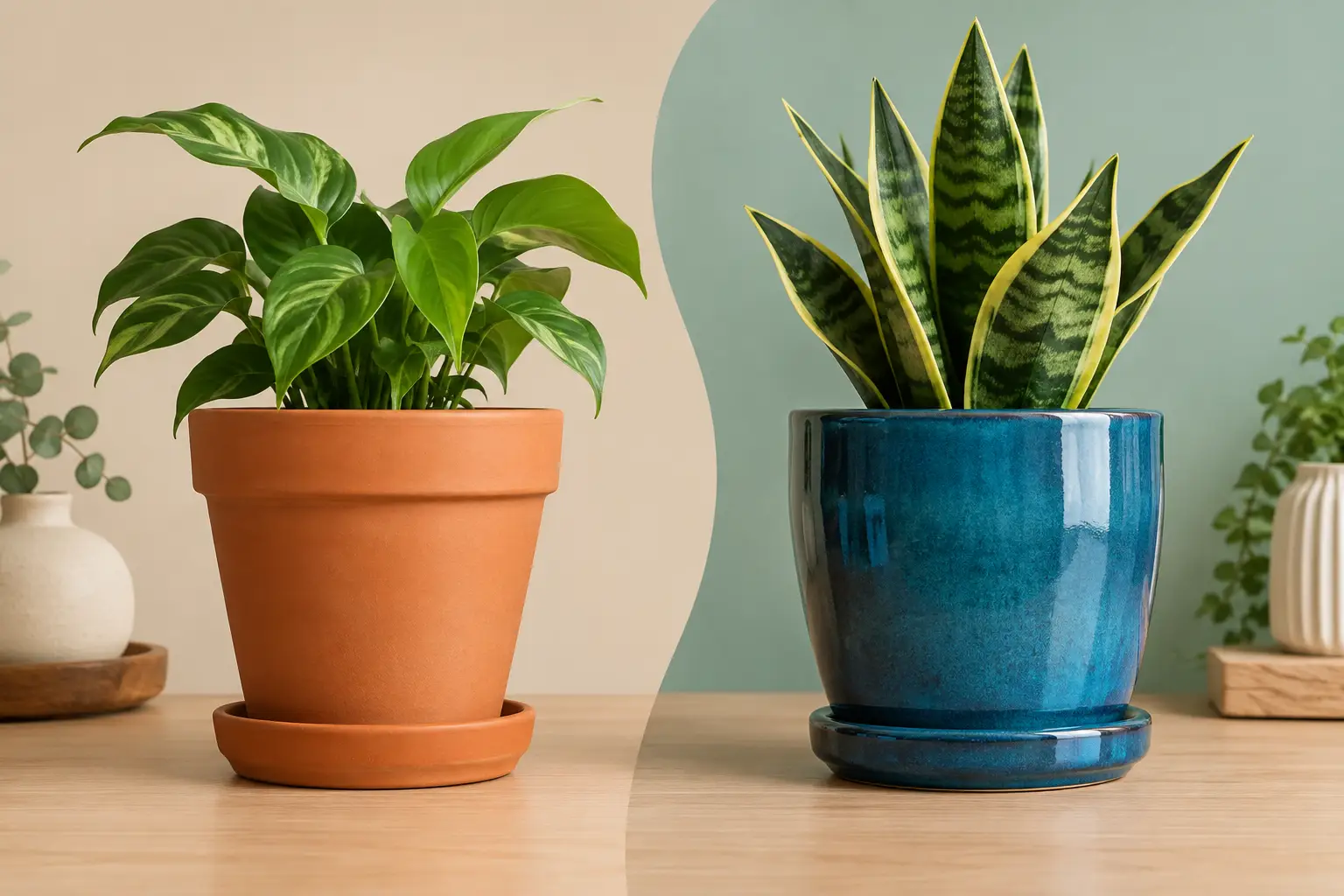
A thirsty fern in a sunny window and a carefully trained juniper bonsai do not ask the same things of a pot. That is why the choice between terracotta versus glazed planters is more than a decorating decision. The surface, weight, porosity, and finish of a planter all shape how quickly soil dries, how roots breathe, and how the finished plant display feels in a room.
Both materials have a place in a plant-filled home. Terracotta brings an earthy, timeworn look and a naturally breathable wall. Glazed ceramic offers color, shine, and a more controlled growing environment. A hand-finished planter can bring either material to life, whether it is a quiet little bonsai pot or a cheerful piece made to hold a trailing pothos on a bookshelf.
Terracotta Versus Glazed Planters: The Core Difference
Unglazed terracotta is fired clay with an open, porous surface. Water can slowly move through its walls and evaporate, so the pot itself participates in the drying cycle. That is the feature gardeners often love most, especially in warm Texas-like conditions or for plants that dislike staying wet around their roots.
A glazed planter begins as clay, then receives a glass-like coating before its final kiln firing. The glaze seals most of the surface, making the pot far less absorbent. Soil moisture changes mainly through the top of the pot and through a drainage hole, rather than through the walls.
Neither option is automatically better. The right choice depends on the plant, the light in your home, your watering habits, and the feeling you want the piece to add to your space.
Why terracotta dries faster
Terracotta is especially friendly to growers who tend to water generously or who keep plants in lower-light spots where soil already dries slowly. Succulents, cacti, many herbs, and Mediterranean-style plants often appreciate the extra airflow around their roots. The clay may darken after watering, offering a useful little visual clue that moisture is still working its way out.
That same breathability means terracotta can ask more of you in summer. A small pot on a hot patio may dry surprisingly fast, and a leafy houseplant near bright afternoon light may need checking more often than it would in a glazed container. Terracotta is forgiving of overwatering, but not always forgiving of forgetful watering.
Why glaze holds moisture longer
Glazed ceramic slows evaporation through the pot wall, which can be useful for moisture-loving houseplants or for anyone whose watering schedule is a bit less frequent. Calatheas, ferns, peace lilies, and many tropical plants may be happier when their soil does not swing from soaked to bone dry quite as quickly.
A glazed pot does not eliminate the risk of overwatering. In fact, because moisture leaves more slowly, drainage becomes even more important. Choose a planter with a drainage hole whenever possible, and use a saucer to protect furniture. If a decorative container has no drainage, treat it as a cachepot: keep the plant in a nursery pot inside it, then remove it to water and let it drain fully.
The Look: Earthy Patina or a Pop of Color
Terracotta has a charm that does not need much help. Its warm orange-red clay tones work beautifully with green foliage, weathered wood, woven baskets, stone, and sunlit shelves. Over time, mineral deposits from water and fertilizer may create pale marks on the outside. Some plant lovers see this as a flaw, but others enjoy the soft, aged patina that makes a pot feel like it has been part of the garden for years.
Glazed planters are more like small pieces of functional art. A glossy ocean blue can brighten a coastal corner. A speckled green or mossy glaze can echo the colors of a bonsai canopy. A deep, dramatic glaze can make the silhouette of a snake plant feel even more sculptural. Because each glaze responds to heat in its own lively way inside the kiln, handmade pieces may show gentle shifts in color, pooling, speckles, or variation around the rim.
That variation is part of the magic. Factory-perfect uniformity has its place, but a hand-finished ceramic planter carries evidence of the studio: the careful cleaning of seams, the touch of glaze, and the transformation that happens during firing.
What Bonsai Growers Should Consider
For bonsai, the conversation is not just terracotta versus glaze. It is also about proportion, drainage, root health, and the visual relationship between tree and pot. A bonsai container should support the tree without stealing its entire story.
Unglazed pots are traditional choices for many conifers and rugged, textured trees. Their subdued surface lets aged bark, twisting trunks, and fine branching take center stage. The porous clay can also help a grower manage moisture, although a shallow bonsai pot will dry quickly regardless of finish.
Glazed bonsai pots are often wonderful for flowering, fruiting, or deciduous trees, and for trees with a graceful or playful character. A glaze can echo berry color, spring leaves, autumn tones, or the quiet mood of a landscape. For either style, generous drainage holes matter more than the finish alone. Healthy roots need oxygen, and no beautiful pot can make up for soil that remains waterlogged.
Weight, Durability, and Everyday Care
Glazed ceramic planters are often heavier than simple terracotta pots, especially when they have thicker walls or decorative details. That can be a welcome advantage for top-heavy plants that like to tip. It also makes them feel substantial on a mantel, table, or plant stand. Terracotta is usually easier to move, though large pieces still deserve two hands and a steady path.
Both types of pottery can crack if dropped or exposed to repeated freezing and thawing while wet. If you live where winter temperatures regularly dip below freezing, bring ceramic planters indoors or move them to a protected area before a hard freeze. Water trapped in clay can expand as ice and cause damage.
For cleaning, wipe glazed surfaces with a damp cloth and mild soap if needed. Avoid harsh abrasives that can dull a glossy finish. Terracotta can be brushed clean and rinsed, but let it dry thoroughly before replanting. If white mineral marks appear, a gentle scrub with a soft brush can help. A bit of age is not a problem, though. It is simply part of the pot’s growing story.
Choosing the Right Planter for Your Plant and Home
Start with the plant’s needs, then let your style join the decision. Choose terracotta if your plant prefers drying between waterings, if your home runs humid, or if you love the quiet beauty of natural clay. Choose glazed ceramic if your plant likes steadier moisture, if you want a bold color or decorative finish, or if the planter will be a focal point in your room.
It also helps to be honest about your habits. If you are a frequent waterer, terracotta provides an extra margin of safety for plants that hate wet feet. If you travel often or occasionally miss a watering day, a glazed planter may slow the dry-down enough to be useful. Light levels, pot size, soil mix, and airflow will still affect watering far more than any single rule can predict.
When in doubt, feel the soil before watering. Lift the pot if you can. Notice how it looks a day after watering, then three days later. A thriving plant teaches you more about its preferred rhythm than a label ever could.
About the Artist
Billy Williams is the artist behind Billy’s Creations TX, where he creates handcrafted ceramics, bonsai pots, wildlife photography, and other original artwork. His work celebrates the small details that make a home feel personal, from useful pottery for plant lovers to imaginative pieces with a little fantasy and nature tucked into their design.
The best planter is the one that helps your plant grow while making you smile each time you pass it. Let the roots guide the practical choice, then choose the clay or glaze that makes your little green corner feel more like your own.