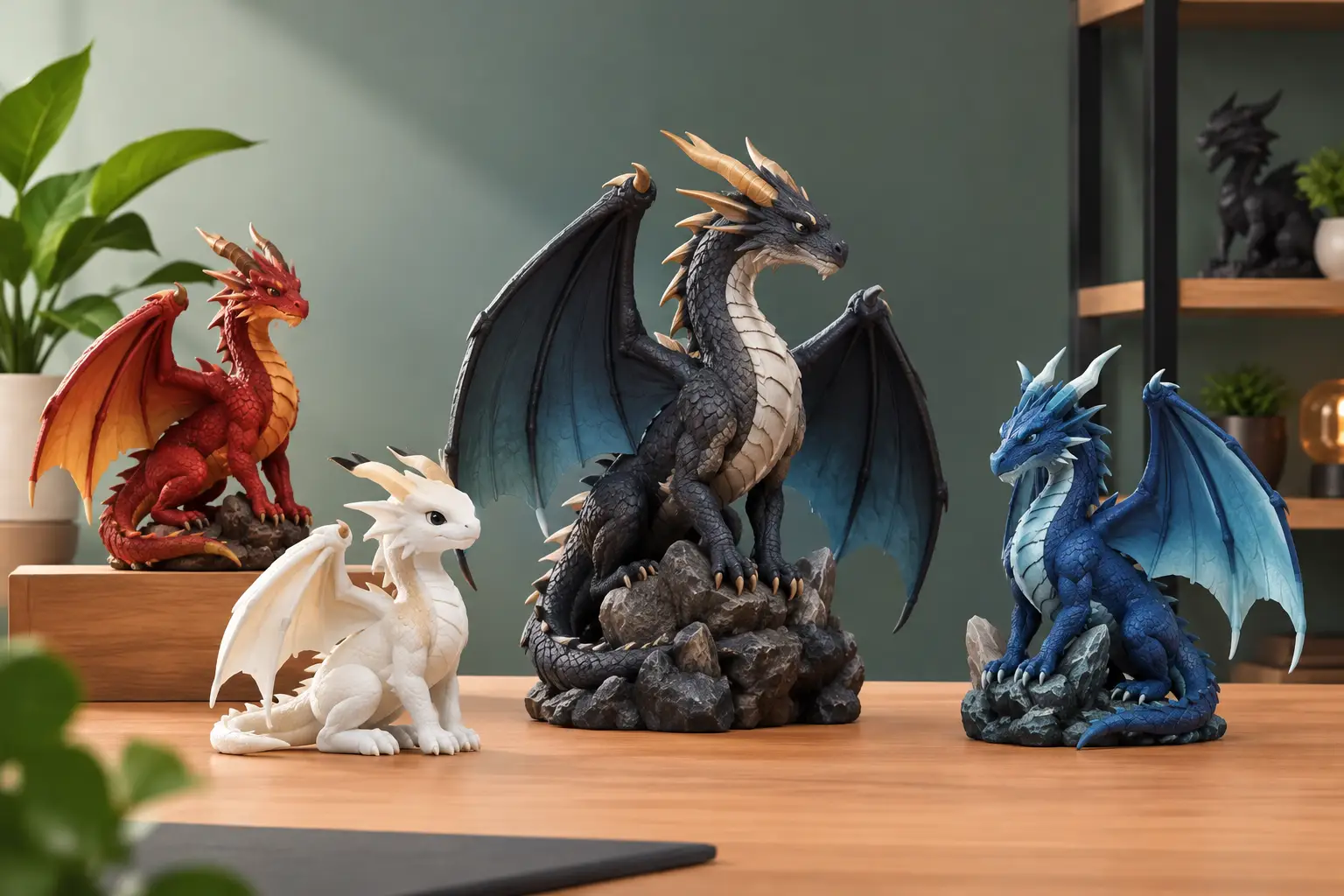
A dragon figure earns its place on a shelf when it feels like it arrived with a story already in progress. This guide to collectible dragon figures is for anyone drawn to curled tails, watchful eyes, castle ledges, and the small handmade details that make a fantasy piece feel personal rather than pulled from a warehouse bin.
For some collectors, dragons are companions to favorite books, games, and folklore. For others, they are simply delightful creatures to tuck beside a houseplant, line up on a mantel, or give to someone who deserves a little more magic in their day. The best collection does not need to be large. It needs to feel like yours.
Choose the Kind of Dragon You Want to Live With
Before considering size, price, or display space, think about the feeling you want a dragon to bring into the room. A fierce, horned guardian has a different presence than a sleepy hatchling or a round little dragon with an expression made for a windowsill. Collecting becomes more satisfying when a piece has a role in your home.
Traditional fantasy dragons often have scales, wings, claws, and an alert pose. They work beautifully near books, framed fantasy art, or castle-themed décor. Whimsical dragons tend toward softer shapes and playful expressions. These are especially easy to mix into everyday spaces, where a dragon can perch beside a spoon rest, a leafy trinket dish, or a favorite potted plant without making the room feel like a themed set.
Also consider whether you enjoy a coordinated group or an assortment of personalities. A matching series in similar glazes can feel calm and intentional. A more eclectic dragon hoard, with varied colors, poses, and makers, feels like a cabinet of found treasures. Neither approach is better. It depends on whether you like visual order or the pleasure of surprise.
Why Handmade Ceramic Dragons Feel Different
A factory-made figure is designed for consistency. A handmade ceramic dragon is shaped by process. From slip-casting through careful cleaning, hand-finishing, glazing, and kiln firing, each stage leaves room for small variations that give the finished piece character.
Slip-casting begins with liquid clay poured into a mold, but the real personality often appears afterward. Seams are cleaned, details are refined, and the surface is prepared by hand. A maker may sharpen a claw, soften the curve of a wing, or spend extra time defining scales and facial features. Glaze then brings its own bit of kiln magic. Color may settle more deeply in a recessed detail, or show subtle movement across a dragon’s back.
Those variations are not flaws to apologize for. They are part of the appeal of artisan ceramics. A tiny shift in glaze, a slightly different expression, or a hand-finished edge is evidence that the object passed through real hands and real fire. If you want every figure to be identical, mass production may be the better fit. If you enjoy objects with individual presence, handmade work offers something more memorable.
Look Closely at the Details
When choosing collectible dragon figures, let the details do some of the talking. A strong design is not only about having many scales or the brightest glaze. Notice the silhouette first. Can you recognize the dragon from across the room? A clear curve of the neck, spread of the wings, or coil of the tail gives a figure visual strength.
Then look at the quieter choices. Are the eyes expressive? Does the dragon’s pose suggest movement, mischief, or rest? Does the base feel stable? In ceramic work, well-considered thickness and support matter. Delicate wings and tails are charming, but a figure also needs to be made for the reality of being displayed, dusted, and occasionally moved.
Glaze deserves attention, too. Glossy finishes can make a dragon look jewel-like, especially in deep greens, blues, purples, or metallic-looking shades. Matte or softly textured glazes can create an earthy, ancient feel. Unfinished bisque offers another route entirely: a ready-to-paint dragon becomes both a collectible and a creative project, with colors chosen to match a bedroom, holiday display, or a child’s own imagined realm.
Start a Collection With Room to Grow
A common collecting mistake is buying only because a figure is available. Instead, give yourself a loose collecting thread. You might focus on dragons with castles, dragons in natural colors, tiny shelf-sized creatures, or dragons that pair with botanical décor. A theme does not need to be strict. It simply gives your collection a point of view.
Scale is one of the most practical things to consider. Measure the shelf, tabletop, or curio cabinet where the piece will live. A palm-sized dragon can become a sweet accent on a desk or plant stand. A larger sculpture needs breathing room so its shape can be appreciated. If you are building a group, vary height thoughtfully. One taller dragon behind two smaller figures often creates a more pleasing scene than a straight row of identical sizes.
It is also wise to leave a little space between pieces. Dragons look more special when their wings, tails, and profiles can be seen. Crowding too many treasures together can turn a collection into visual clutter, especially in a small room. Let one favorite piece be the guardian of a shelf, then add companions slowly.
Display Your Dragon Hoard in Everyday Spaces
Dragon figures do not need a dedicated fantasy room to feel at home. A single ceramic dragon can bring warmth to an entry table, a bookcase, a reading nook, or a home office. Pair it with a small stack of books, a natural stone, or a trailing plant for a scene that feels gathered rather than staged.
A mantel or open shelf gives larger figures the presence they deserve. Use the rule of contrast: a dark dragon often stands out against a light wall, while a pale or glossy figure can look striking against darker wood or a richly colored backdrop. If your dragon has a detailed silhouette, place it where light can catch the edges of its wings and horns.
For a playful kitchen touch, keep a small dragon near other handcrafted ceramics, such as spoon rests or trinket dishes, but away from high-traffic edges. In a plant-filled room, dragons and bonsai pots make natural neighbors. The pairing feels like a little garden scene, especially when the ceramic colors echo the greens and browns of leaves, bark, and soil.
Avoid direct, intense sunlight for long periods, particularly for pieces with decorative finishes or painted details. Ceramic itself is durable, but display surfaces are not always forgiving. Put felt pads beneath a figure if it rests on delicate furniture, and choose a stable location away from eager pets, swinging cabinet doors, and crowded table corners.
Care for Ceramic Dragon Figures Gently
Most ceramic dragons only need occasional dusting. A soft, dry microfiber cloth or a clean, gentle brush works well around wings, scales, and other textured details. Skip harsh cleaners, abrasive scrubbers, and soaking unless the maker specifically says the piece is suitable for it.
When moving a figure, support it from the body or base instead of lifting by a wing, tail, horn, or head. Those decorative areas can be more vulnerable than they appear. If you pack a dragon for a move or seasonal storage, wrap it in plain tissue first, then cushion it securely in a box. Give each figure its own space so glazed surfaces do not rub against one another.
If a handmade piece has a small variation in color or form, enjoy it as part of its studio-made story. Collectibles gain meaning over time, especially when you remember where they came from, who made them, or who gave them to you.
Give a Dragon That Feels Personal
Dragon figures make especially thoughtful gifts because they can suit so many kinds of people: the fantasy reader, the tabletop gamer, the gardener with a sense of humor, the child who loves mythical creatures, or the friend building a cozy, eclectic home. The most meaningful choice is usually not the largest one. It is the one that matches their personality.
A bright, cheerful dragon may suit a birthday or housewarming. A more dramatic guardian figure can mark a graduation, new job, or fresh beginning. For someone who loves making things, a paint-your-own bisque dragon offers the gift of time, color, and imagination along with the finished keepsake.
About the Artist
Billy Williams is the artist behind Billy’s Creations TX, where he creates handcrafted ceramics, bonsai pots, wildlife photography, and other original artwork. His work celebrates the small pleasures of handmade objects, from useful pottery to whimsical creatures ready to bring a little fantasy to a favorite corner of home.
The right dragon figure does more than fill an empty shelf. It becomes a small spark of story in the room, waiting for the next curious visitor to notice it.