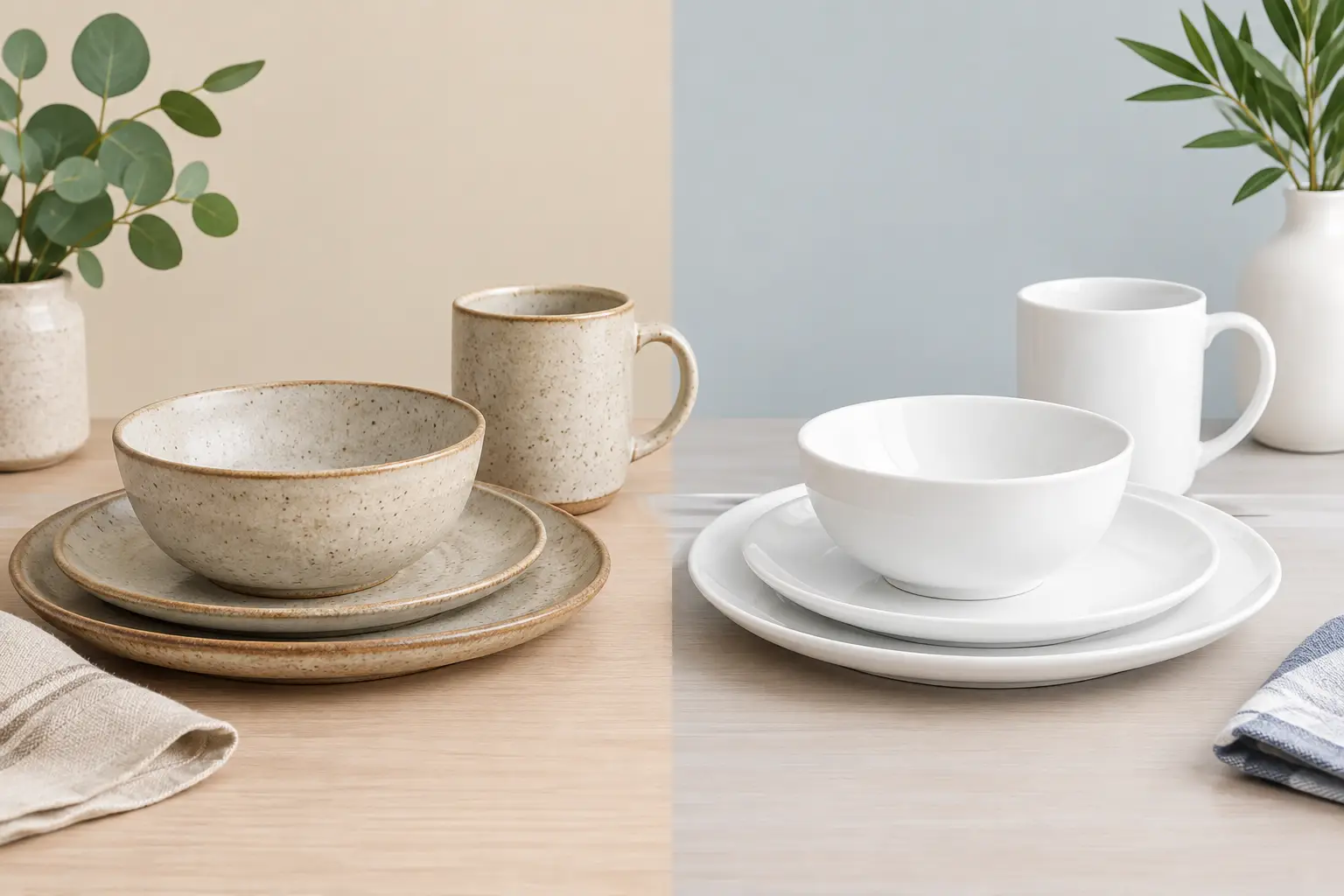
A tiny dragon guarding a bookshelf, a leaf-shaped spoon rest beside the stove, and a bonsai pot catching the morning light can all be called ceramic. But the clay body beneath the glaze changes how each piece looks, feels, and lives in your home. When choosing stoneware versus porcelain, the better choice is not always the whiter or finer-looking one. It is the one that suits the object, its job, and the kind of handmade character you enjoy bringing home.
For plant people, collectors, gift givers, and makers, understanding the difference makes shopping for ceramic pieces much more satisfying. You can choose with your eyes, certainly, but you can also appreciate what happened between the first soft clay form and the final kiln firing.
Stoneware Versus Porcelain at a Glance
Stoneware and porcelain are both fired ceramic materials, but they begin with different clay recipes and are usually fired at different temperatures. Those choices affect the finished piece’s color, density, texture, and personality.
Stoneware is often earthy in appearance, even when covered in a glossy, colorful glaze. Its clay body may be cream, gray, tan, brown, or speckled. It is valued for its sturdy, grounded feeling and its ability to make glazes look wonderfully rich and varied. A hand-finished stoneware dish can feel like it belongs on a kitchen counter, a garden shelf, or a table set for a relaxed family meal.
Porcelain is made from refined clay materials, commonly including kaolin, and is fired until it becomes very dense and glass-like. It is known for a smooth surface, a clean pale color, and, when made thin enough, a gentle translucence when held to the light. Porcelain can be graceful and crisp, making it a lovely fit for delicate decorative forms, refined table settings, and pieces where fine detail is the star.
Neither one is automatically better. They simply speak different visual languages.
The Look and Feel: Earthy Warmth or Fine Detail?
Stoneware has a friendly, tactile quality. Even a polished stoneware glaze often carries a little visual movement from the clay and firing process beneath it. Speckles may peek through. Edges can have a soft handmade presence. Glossy glazes can pool in carved details, while matte finishes can feel as calm as a smooth river stone.
That makes stoneware especially appealing for nature-inspired home décor. Think of a small planter in a sunlit window, a spoon rest with a leaf motif, or a trinket dish that gives a favorite ring a proper little resting place. Its warmth plays beautifully with wood, woven baskets, houseplants, coastal colors, and eclectic shelves filled with objects collected over time.
Porcelain has a different magic. Its surface is usually smoother and more uniform, allowing precise sculpted features, clean lines, and bright glaze colors to stand out. A porcelain piece can feel airy and polished, even when the subject is playful. A tiny animal figure or fantasy creature with fine textures may benefit from porcelain’s ability to hold sharp detail.
There is also a practical decorating question here. If your room leans cozy, rustic, botanical, or whimsical, stoneware’s visual weight may feel right at home. If you prefer a light, minimal, or classic look, porcelain may be the better companion. Of course, a cheerful gnome or dragon is allowed to ignore every decorating rule in the book.
Durability Depends on More Than the Clay
People often assume porcelain is fragile because fine porcelain teacups look delicate. In reality, properly fired porcelain is very dense and can be exceptionally strong. Stoneware is also durable and beloved for everyday functional ware. Both can last for years when made well and treated thoughtfully.
The catch is that no ceramic material is invincible. A dropped dish can chip or break. A planter can crack if water trapped inside freezes. A sculptural piece with thin ears, wings, or tails needs more careful handling than a low, rounded bowl, regardless of whether it is stoneware or porcelain.
Glaze and firing matter, too. A well-fired glaze creates a protective surface that makes many ceramic pieces easier to clean and better suited to regular use. A handmade object still deserves a gentle touch, especially around unglazed areas, raised details, and delicate appendages on figurines.
For kitchen accessories, always follow the individual maker’s care guidance. Some handmade ceramics are suitable for food service, dishwashers, or microwaves, while others are intended for display or light use. A spoon rest may happily handle everyday cooking splatters, but a detailed collectible castle is much happier away from the sink.
What This Means for Bonsai Pots and Planters
For bonsai growers and houseplant owners, the question is often less about a label and more about a pot’s design. Drainage holes, saucers, wall thickness, glaze coverage, and the plant’s moisture needs are all part of the decision.
Stoneware is a natural favorite for planters because it has a substantial, grounded presence. That extra visual weight can balance a lively trailing plant or a carefully shaped bonsai tree. A glazed stoneware pot also offers a broad canvas for earthy greens, ocean blues, woodland browns, or playful fantasy colors.
Porcelain planters can look strikingly elegant, particularly with small plants, succulents, or a carefully styled indoor collection. Their smooth, pale surfaces can make foliage appear even greener. But because porcelain often has a refined visual character, it may not be the first choice for every outdoor or rugged garden setting.
For either material, avoid letting water stand in a pot without drainage unless you are using it as a cachepot with a removable nursery container. Plants need breathing room at their roots, and your ceramic piece will be easier to enjoy when it is not constantly holding excess water.
Why Handmade Ceramics Show Their Process
Factory-made ceramics aim for perfect repetition. Handmade ceramics invite a little more life into the finished object. In a studio process, forms may be slip-cast, cleaned, refined by hand, glazed, and kiln-fired in small batches. Each stage leaves room for subtle variation.
A glaze may break differently over a raised dragon scale than it does on a smooth dish. A tiny shift of color may appear near an edge. The back of a figurine may carry a gentle reminder that a real pair of hands cleaned the seam, finished the surface, and prepared it for firing.
These are not defects to fear. They are often part of the charm, as long as the piece remains sound, functional for its intended purpose, and honestly described. Handmade work has a way of making a kitchen shelf, plant corner, or gift table feel less like a catalog page and more like a collection of stories.
Choosing the Right Ceramic for a Gift
If you are shopping for someone else, let their habits lead the way. A stoneware spoon rest, trinket dish, or planter makes an approachable gift for someone who enjoys practical objects with handmade warmth. It feels useful from the first day, yet still special enough to display.
Porcelain can be a thoughtful choice for someone who loves fine detail, pale palettes, or more polished decorative accents. A small porcelain-style figurine may become a cherished shelf companion for a collector who notices every tiny expression, wing, paw, or castle turret.
For families and creative friends, ready-to-paint bisque offers a different kind of joy altogether. Bisque is ceramic that has received its first firing but has not been glazed. It gives painters a welcoming blank canvas for their own colors, patterns, and wild ideas. A plain dragon can become a rainbow guardian. A small animal can wear spots, stripes, stars, or a very fancy cape.
Care That Keeps Ceramic Pieces Looking Lovely
Most finished ceramic décor benefits from simple care: dust it with a soft cloth, hand-wash detailed pieces when needed, and avoid sudden temperature changes. Do not move a refrigerator-cold dish straight into a hot oven, and do not pour boiling liquid into a cold ceramic vessel unless its use instructions specifically say it is designed for that job.
For planters, wipe away mineral deposits and empty standing water from saucers. For figurines, place them where they are less likely to be bumped by enthusiastic pets, swinging cabinet doors, or a particularly determined robot vacuum. A little thoughtful placement goes a long way.
About the Artist
Billy Williams is the artist behind Billy’s Creations TX, where he creates handcrafted ceramics, bonsai pots, wildlife photography, and other original artwork. His work celebrates the small studio details that make a piece feel personal, from hand-finished surfaces to colorful glazes and imaginative sculptural forms.
The best ceramic piece is the one that makes you pause when you walk past it: the planter that flatters your favorite bonsai, the dish that earns its place beside the stove, or the little creature that makes a shelf feel more like your own. Choose stoneware when you want earthy warmth, porcelain when you love fine refinement, and handmade work whenever you want a little more story in the everyday.